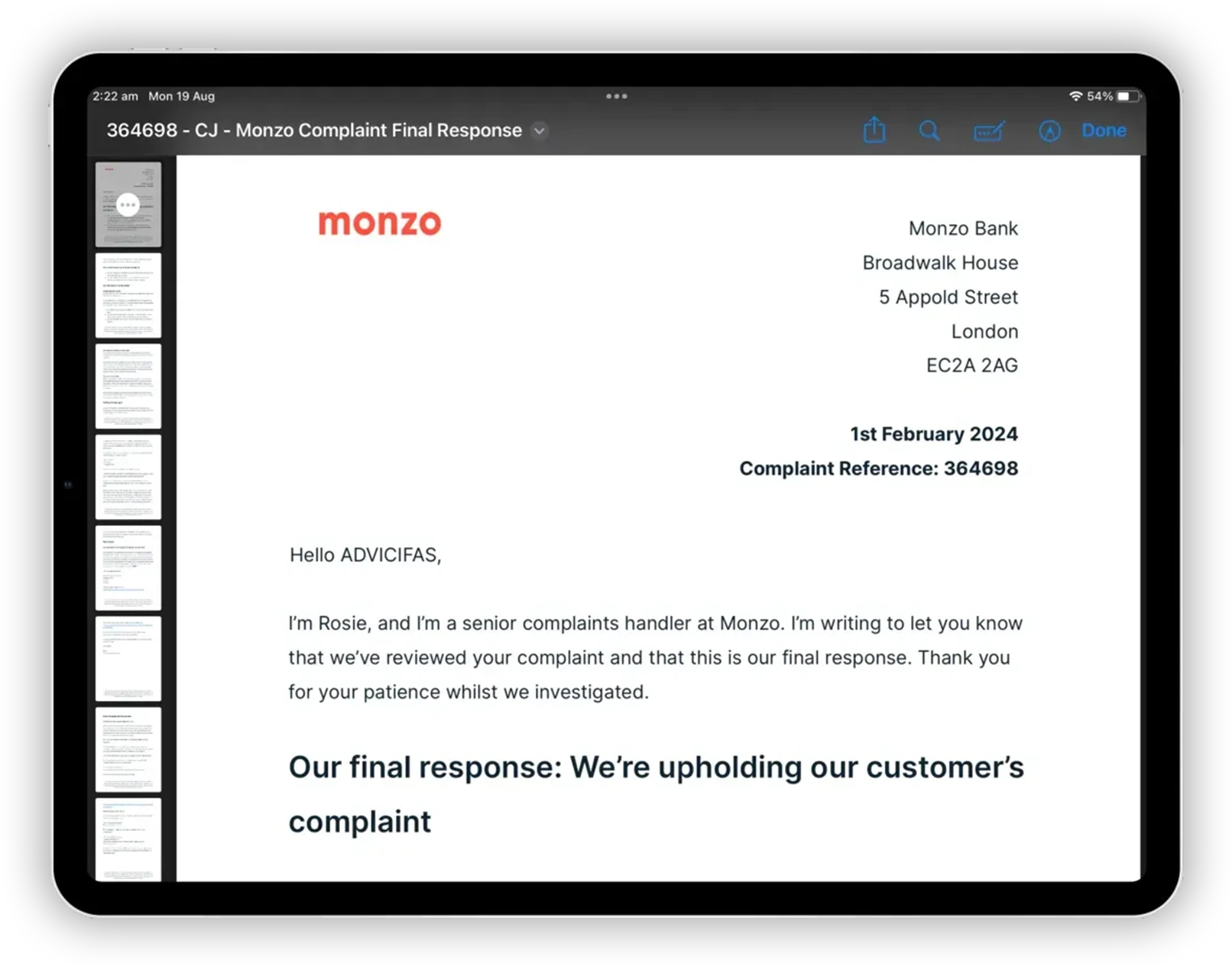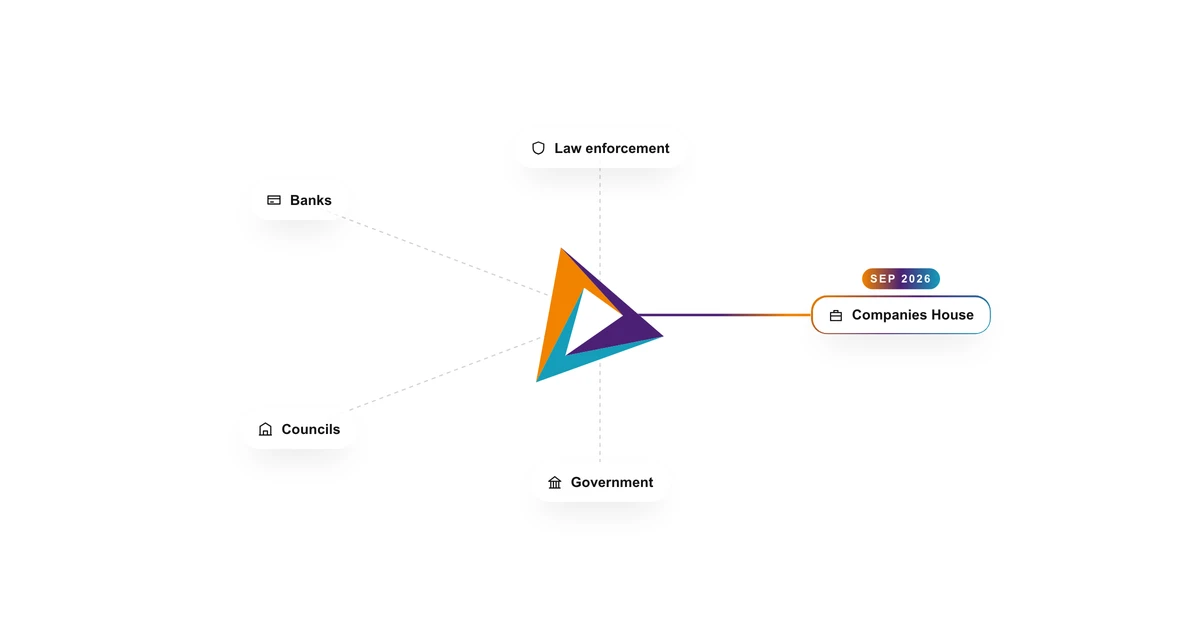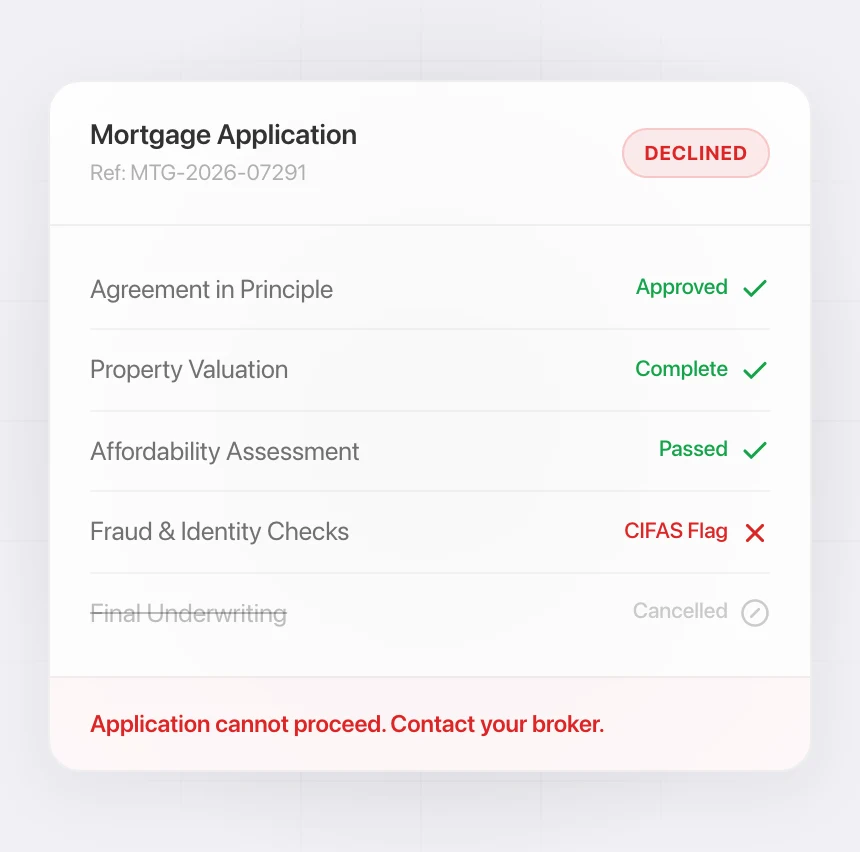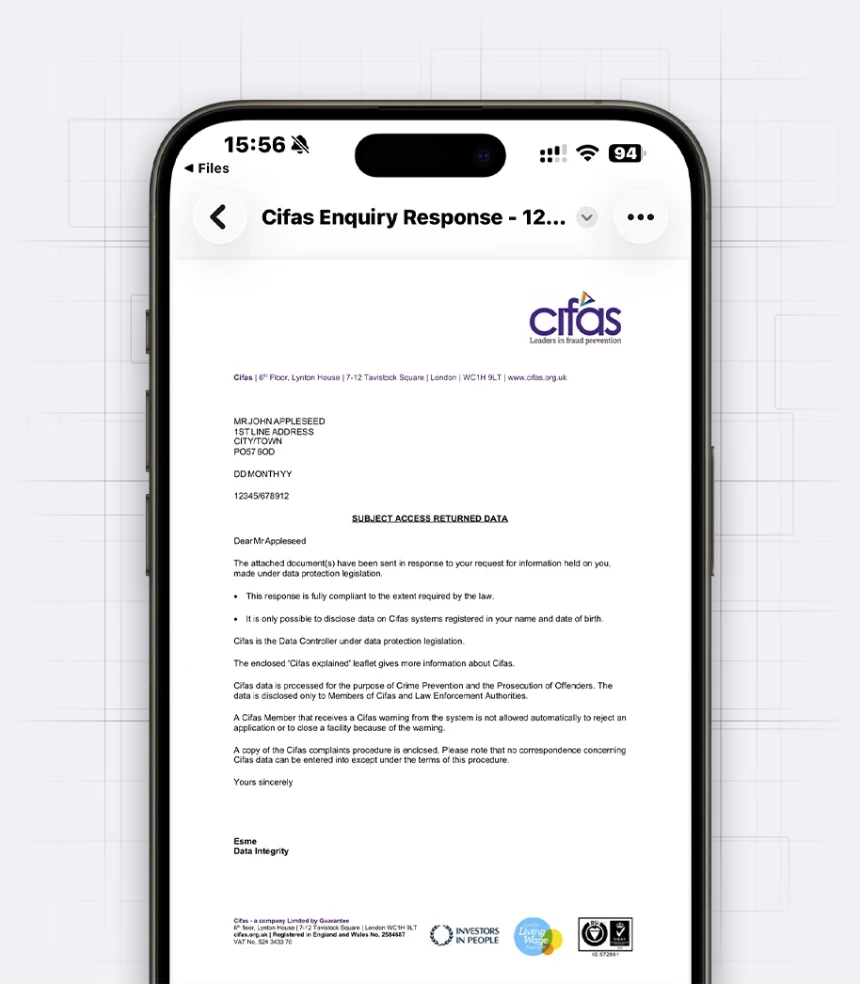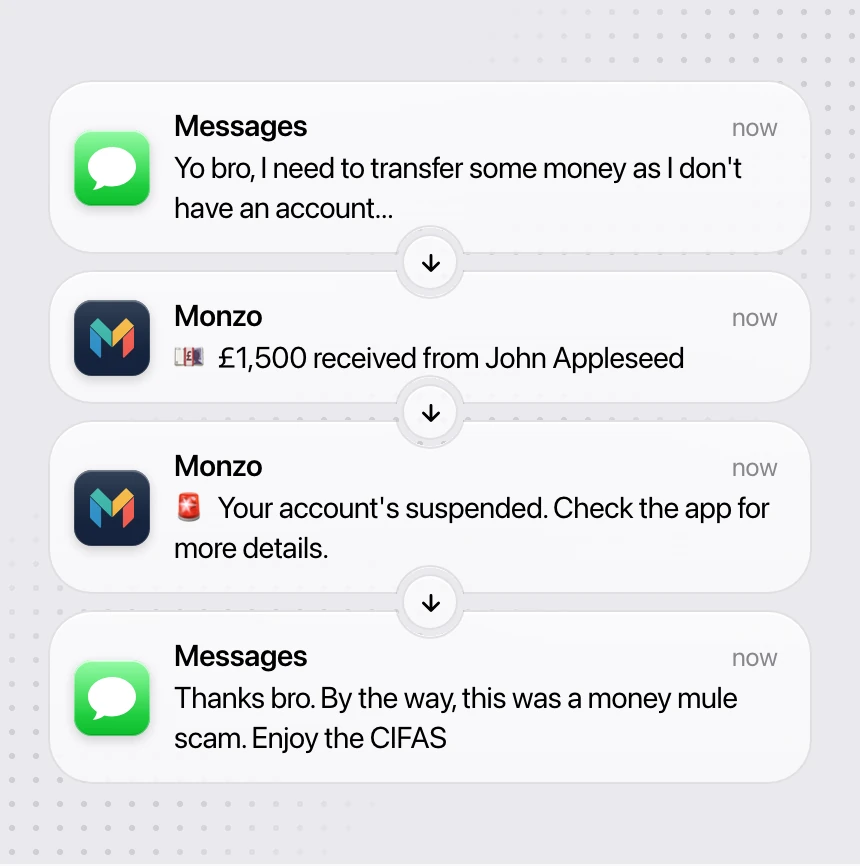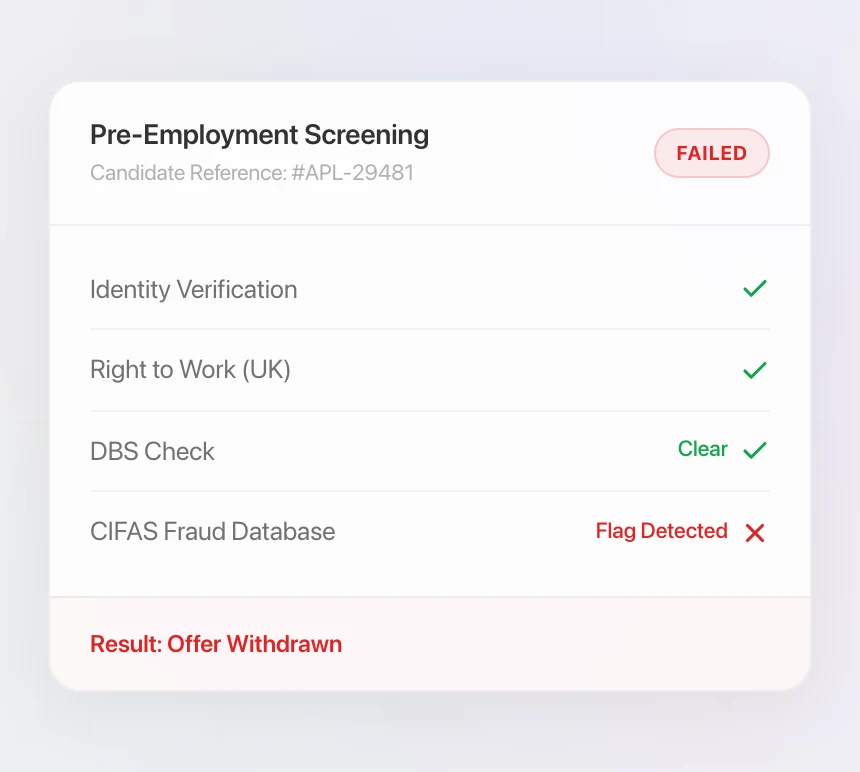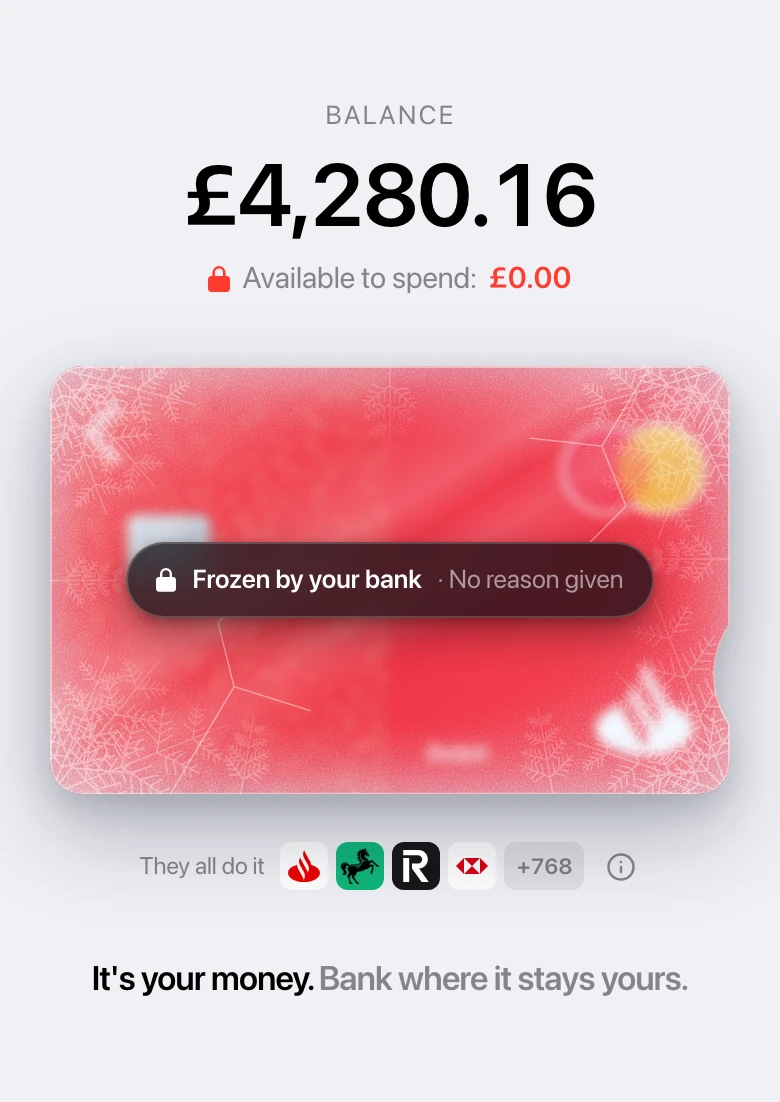
A CIFAS marker is a fraud flag filed against your name on the CIFAS National Fraud Database , visible to over 775 banks, lenders, insurers, telecoms, and employers for six years. It's not a criminal conviction. It's a unilateral allegation by a single institution, filed without a hearing or notification. And it can be challenged and removed at any point.
If you're reading this, you've probably already been told you need a solicitor to deal with it. You don't. Here's why.
A CIFAS marker is not a legal dispute
If you've just discovered a CIFAS marker on your record, your first instinct is probably to call a solicitor. It feels like a legal problem. Someone has accused you of fraud. You need a lawyer.
That instinct is wrong. And following it will cost you thousands of pounds for nothing.
A CIFAS marker is not a court order. It's not a criminal charge. There's no lawsuit to win, no judge to convince, no opposing counsel to outmanoeuvre. A CIFAS marker is a data entry on a shared database, filed by a single institution, without your knowledge, without a hearing, and without any independent review.
The challenge process is about one question: does the data meet the filing standard? Specifically, does it comply with CIFAS Principle 4 , which requires reasonable grounds to believe fraud was committed and clear, relevant and rigorous evidence, and is the processing lawful under the UK General Data Protection Regulation and the Data Protection Act 2018 ?
That's a data protection and regulatory matter. Not a legal dispute. The distinction matters enormously, because it determines who is actually equipped to help you, and who is taking your money to do something they fundamentally don't understand.
What solicitors actually do with your money
Here's what happens when you hire a solicitor for CIFAS marker removal. This is not a generalisation; it's the pattern we see repeatedly from people who come to us after spending thousands.
Step one: the template letter. Your solicitor sends a letter to the institution. It looks impressive: headed paper, legal references, firm language. But it's the same letter they send for every CIFAS client. The institution's fraud team recognises it within the first paragraph. They've seen it dozens of times. They send back their standard rejection.
Step two: "this is more complex than expected." Your solicitor receives the rejection and tells you the case needs further work. More research. A more detailed response. More billable hours. You pay another £1,000-£2,000 for a second letter that is marginally more tailored than the first.
Step three: another rejection. The institution rejects again. At this point, many solicitors suggest "exploring other avenues", which means the Financial Ombudsman. They charge you to draft the referral. Some charge hourly to "manage" the Ombudsman process, which is free and doesn't require legal representation.
The total bill: £2,000 to £10,000. For a process that follows the same eight escalation levels regardless of who does it. The institution doesn't care that your letter came from a solicitor. They care whether the arguments in the letter demonstrate that the marker fails the filing standard. A £5,000 solicitor letter with weak arguments loses. A £14.99 letter with precise, evidence-based arguments wins.
Most solicitors who advertise CIFAS services don't specialise in CIFAS. They handle it as a sideline, one case among hundreds of different matters. They don't know which institutions respond to which arguments. They don't know the internal review processes. They don't know the specific weaknesses in automated fraud detection systems. They treat it like a legal dispute when it's a regulatory complaint.
Why solicitors can't do what specialists can
This isn't just about knowledge gaps. Solicitors are structurally limited in ways that actively harm your CIFAS challenge.
Solicitors are regulated by the Solicitors Regulation Authority (SRA). That regulation imposes professional conduct rules that restrict their advocacy tactics. They can't publicly escalate. They can't apply certain forms of pressure that are perfectly legal but professionally inappropriate for a regulated lawyer. They're bound by duties of courtesy to opposing parties that limit the directness of their communications.
A non-regulated CIFAS specialist operates under no such constraints. Every lever available under UK law is on the table:
- Public complaints: formal complaints to regulators that create institutional reputational risk.
- Regulatory referrals: ICO complaints, FCA referrals, and complaints to industry bodies that trigger investigation obligations.
- Systematic escalation: a structured, relentless process that compounds pressure at every stage, not a single letter followed by silence.
- Direct, unfiltered communication: letters that state the position plainly without the hedging language that professional conduct rules require.
The institution knows what a solicitor letter means: "We'll write another letter." The institution knows what a systematic specialist approach means: "This won't stop until the marker is removed or justified."
That difference in perception changes everything. Institutions make cost-benefit calculations. A solicitor letter has a known, limited cost. A systematic escalation process has an unknown, potentially significant cost. Institutions remove markers when the cost of maintaining them exceeds the cost of removing them. Solicitors rarely create enough cost.
The fear tactics used to sell you legal services
The CIFAS solicitor industry runs on fear. Here are the specific claims used to get you to sign an engagement letter, and why every one of them is misleading or outright false.
"Your case is very serious"
Every CIFAS marker is serious in its consequences. None of them are serious in the legal sense solicitors imply. There's no criminal prosecution pending. There's no lawsuit. The marker is a data entry that either meets the filing standard or doesn't. The "seriousness" is designed to justify a serious fee.
"You need legal representation"
You don't. The institution's complaints process doesn't require legal representation. The Financial Ombudsman Service doesn't require legal representation. The ICO complaints process doesn't require legal representation. None of these bodies give additional weight to a complaint because it comes from a solicitor. The quality of the arguments matters. The letterhead doesn't.
"Applying for products will reset the 6-year clock"
This is factually false. CIFAS markers are filed for a fixed six years from the filing date. The marker has a specific start date and a specific expiry date. Applying for financial products, credit cards, bank accounts, or anything else does not extend, reset, or restart that period. The six-year clock runs from the date the institution filed the marker, full stop. This claim is used to create urgency and discourage you from doing anything except paying the solicitor. Don't fall for it.
"Without a solicitor, no one will remove this"
The opposite is closer to the truth. The Financial Ombudsman removes CIFAS markers regularly, in cases brought by individuals without any legal representation. The ICO investigates data protection complaints from individuals. Institutions remove markers in response to well-argued complaints from non-lawyers every day. The removal rate has nothing to do with whether a solicitor is involved. It has everything to do with whether the challenge correctly identifies why the marker fails the filing standard.
"This could affect your criminal record"
A CIFAS marker is not a criminal record entry. It doesn't appear on DBS checks (though some enhanced DBS checks may surface related information). It's held on a private fraud prevention database. Solicitors who blur the line between CIFAS markers and criminal records are either incompetent or deliberately misleading you. Either way, you shouldn't be paying them.

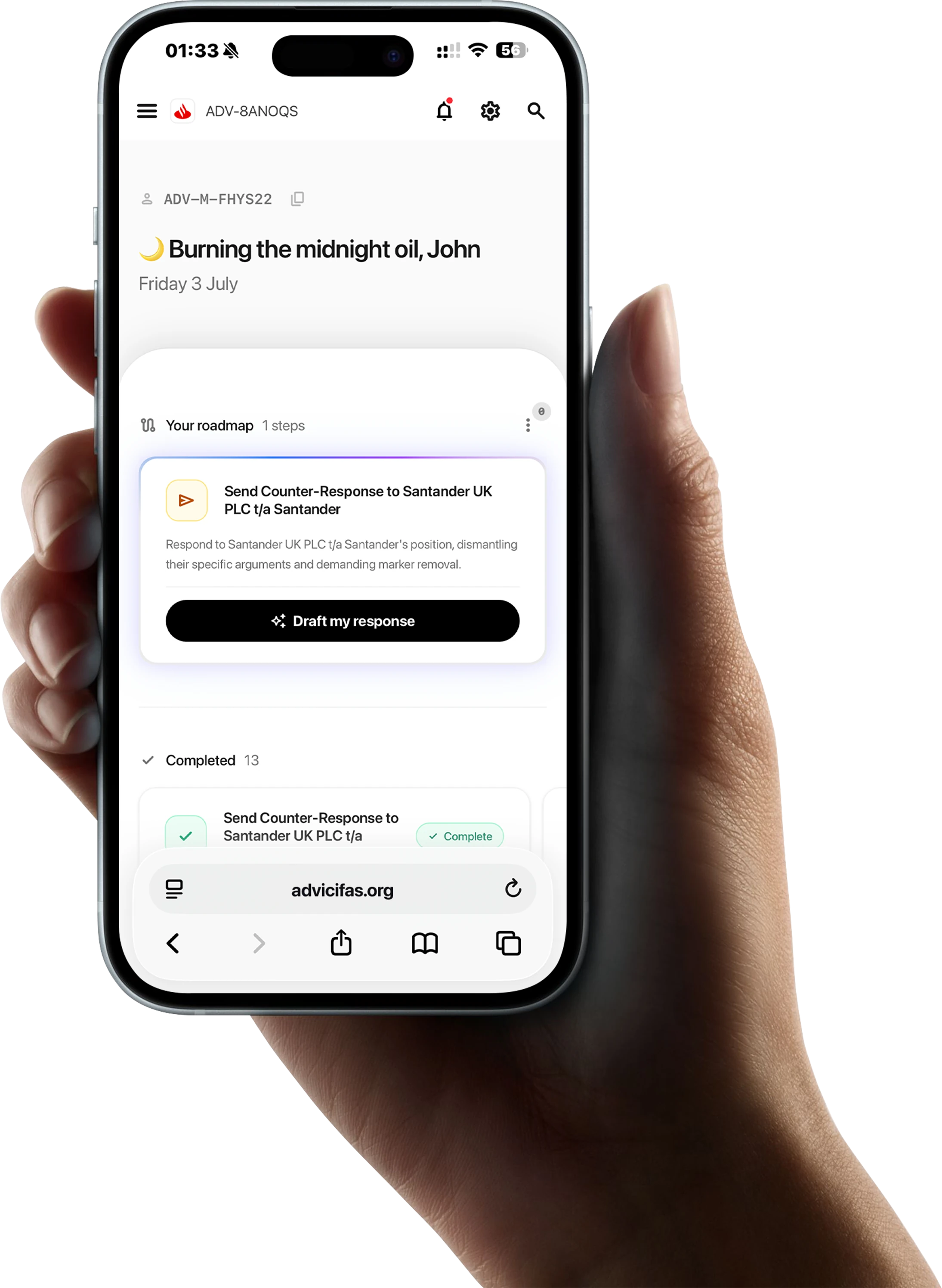
ADVICIFAS Pro
Unfairly
Labelled a Fraud
Risk by CIFAS?
Remove It Like a Pro. Not templates. Not a solicitor. A system that builds your entire legal challenge from your report. £14.99/mo, accessible in minutes, cancel anytime.
What actually works
CIFAS marker removal follows a structured, eight-level escalation process. The process is the same whether you're a solicitor, a specialist, or an individual. What determines the outcome is the quality of the arguments at each level, not who makes them.
The eight levels move from direct complaint to the filing institution, through counter-responses, GDPR challenges, DPA challenges, ICO referral, Financial Ombudsman complaint, FOS final decision, and ultimately judicial review. Each level creates compounding pressure. Each level adds regulatory cost to the institution. (CIFAS marker removal with ADVICIFAS Pro works through each level.)
Here's what makes the difference between a challenge that works and one that wastes months:
- Specificity. The challenge letter must cite the specific legislation that applies to the specific marker type filed by the specific institution. A generic letter citing "data protection rights" gets a generic rejection. A letter citing Article 5(1)(d) UK GDPR accuracy requirements, referencing the institution's obligation under CIFAS Principle 4 to hold clear, relevant and rigorous evidence, and identifying the specific gap in their evidence. That letter creates problems they have to address.
- Institution knowledge. Every institution handles CIFAS challenges differently. Some respond to initial complaints. Some auto-reject everything and only engage at FOS stage. Some have known weaknesses in their fraud investigation process. Knowing the institution's patterns determines the right strategy from day one.
- Compounding arguments. Each escalation level should build on the previous one. The counter-response should address the specific reasoning in the rejection. The GDPR challenge should use evidence obtained through SAR requests. The Ombudsman referral should present a documented pattern of the institution failing to address legitimate concerns. Arguments that compound are arguments that win.
- Persistence. Institutions count on people giving up. The first rejection is standard. The second rejection is standard. The challenge is designed to outlast the institution's willingness to maintain a marker they can't justify. Most people stop at rejection one. The process has eight levels for a reason.
How ADVICIFAS Pro replaces a solicitor
Let's compare directly. No hedging.
Solicitor: £2,000-£10,000
Template letter on headed paper. Standard rejection received. Second letter for additional fee. Months of waiting between each step. No guarantee of outcome. No understanding of CIFAS-specific escalation. No institution-specific strategy. You pay whether it works or not.
ADVICIFAS Pro: £14.99/month
Unique letters built from your CIFAS report. Every letter cites the legislation specific to your marker type and institution. Managed escalation through all eight levels. Response tracking and counter-argument generation. Institution-specific strategy from day one. Cancel anytime: if it's not working, you stop paying. No retainer. No hourly rate. No engagement letter.
A solicitor charges you £5,000 to follow a process they don't fully understand. ADVICIFAS Pro was built specifically for that process, from hundreds of real cases, across dozens of institutions, covering every marker type. The system knows which arguments work against which institutions because it's seen the outcomes.
ADVICIFAS Pro costs £14.99/month. Cancel anytime. Your CIFAS report is analysed, your institution is profiled, and unique challenge letters are built specifically for your case. No templates. No solicitor fees. No guesswork. Start your challenge now.
Stop paying solicitors for work they can't do
Every month you spend paying a solicitor to send letters that don't work is a month the marker continues destroying your financial life. Declined mortgages. Rejected bank accounts. Failed employment checks. Higher insurance premiums. The cost of the marker dwarfs the cost of any solicitor, and the solicitor isn't solving it.
A CIFAS marker is a data protection issue. It requires a data protection approach. It requires knowledge of the CIFAS filing standards, the institution's internal processes, and the regulatory escalation framework. It does not require a law degree, a retainer fee, or headed paper.
The marker either meets the filing standard or it doesn't. If it doesn't, it must be removed. The only question is whether the person challenging it knows how to prove that, and whether they'll persist through every escalation level until the institution has no choice but to act.
Start your CIFAS marker challenge with ADVICIFAS Pro. £14.99/month. Cancel anytime. Built to do what solicitors charge thousands to fail at.
For institution-specific challenge strategies, see our CIFAS marker removal guides covering every major UK institution.