Search online for how to remove a CIFAS marker and you'll be told the same thing every time: you can challenge it yourself, for free.
You can. What nobody tells you is how rarely it works, how little you're allowed to see, and that the government is now plugged into the same database.
If you've got a marker and you've been knocked back, this is for you. If you think this all sounds far-fetched, it's for you too.
You don't have to take our word for it
First and foremost, fraud is real, and some markers are rightly recorded. This isn't about saying every bank is bad. It's about the people who are wrongly marked, and a system that makes it almost impossible for them to prove it.
The key facts here come from CIFAS itself, the Financial Ombudsman Service, Companies House and the law. Check them yourself:
- Companies House joined the CIFAS National Fraud Database in September 2026. CIFAS announced it on its own website .
- Government departments, councils and law enforcement already use or add to the database. CIFAS says so on its public sector page .
- In 2026, about 1 in 7 people who took a CIFAS complaint to the ombudsman won. That's from the ombudsman's own published decisions .
- CIFAS turned over £16.8 million last year. That's from its accounts at Companies House .
Where we give our own opinion, we say so.
Punishment without a trial
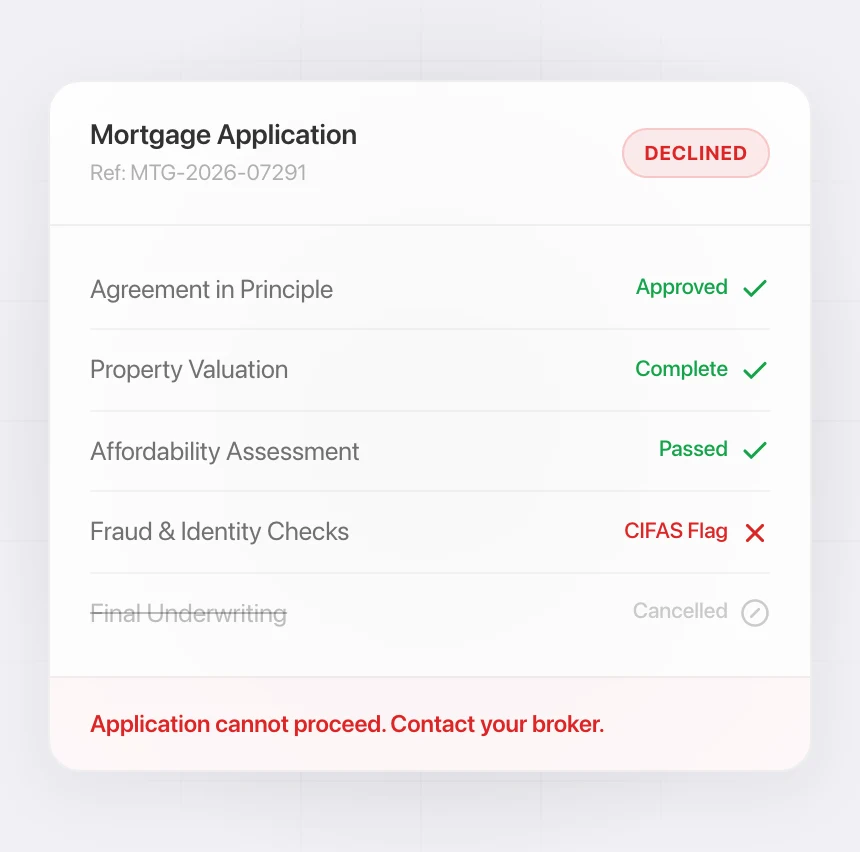
A bank can brand you a fraudster without proving a thing. No police. No charge. No court. Often no warning, and nobody asks your side. One bank decides it suspects you, writes it down, and that record follows you for six years.
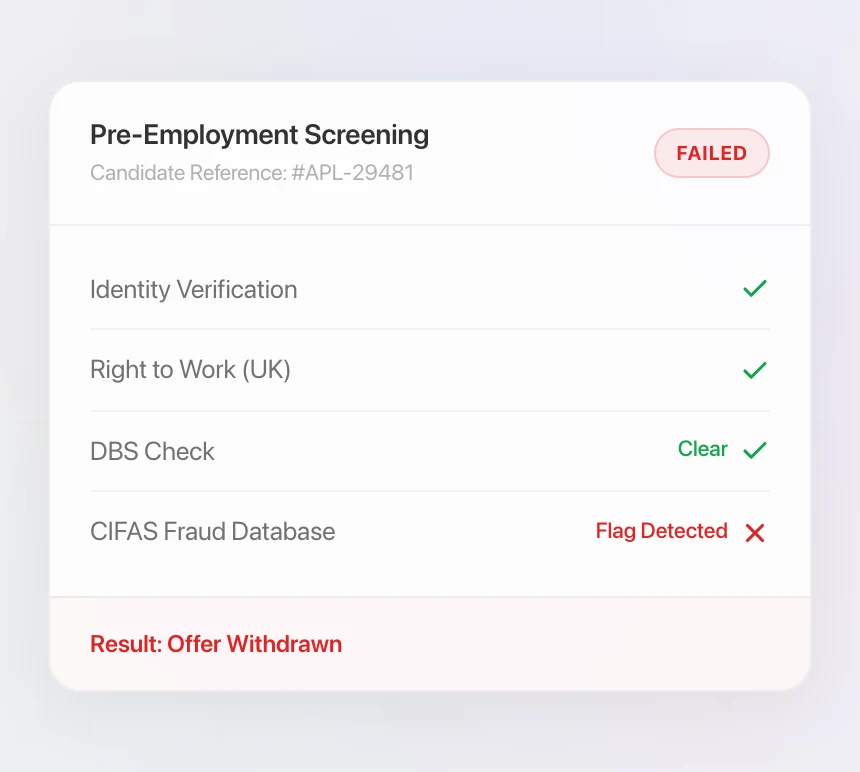
They call it fraud prevention. But when your account is shut, your credit refused, a job offer withdrawn and your business cut off, it's punishment. Call it what they like. It works like a blacklist.
It's a justice system with no court: a six-year sentence, handed out by the accuser, for something nobody had to prove. And when a bank gets it wrong, it costs the bank almost nothing. It costs you six years.
Told when it doesn't matter, silent when it does
Most people have never heard of CIFAS until it already has hold of them.
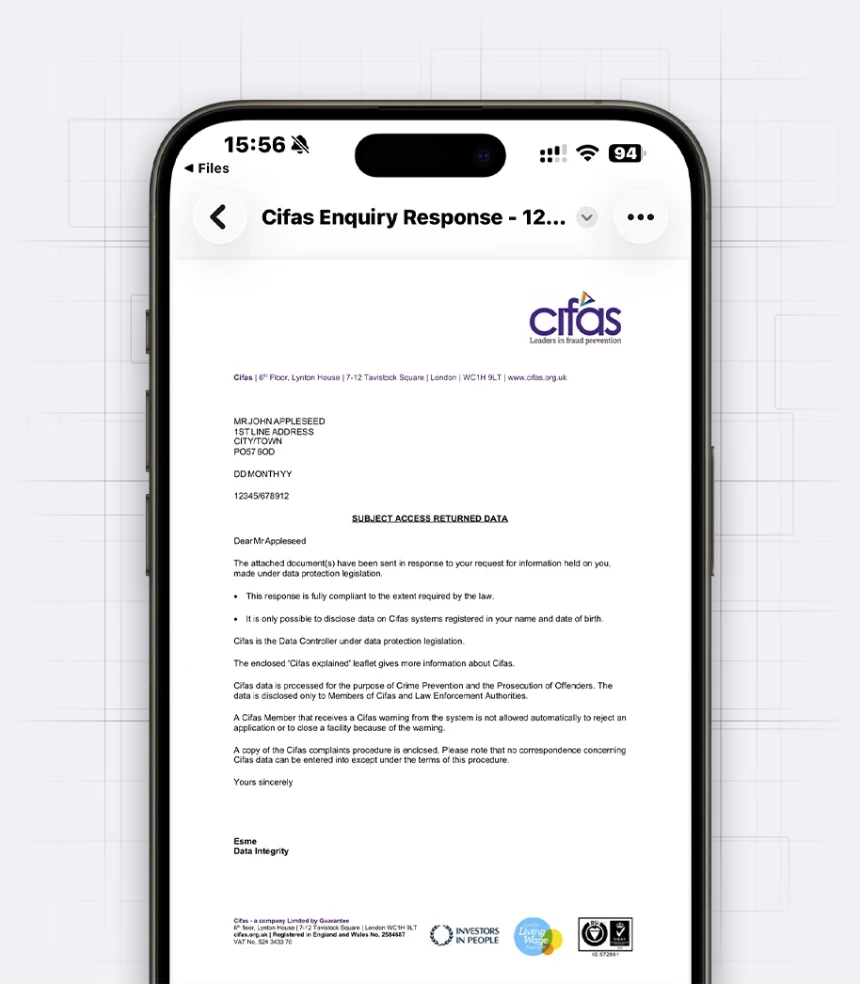
The banks will say you were warned. Page nine of the privacy notice you clicked through when you opened your account says your details may be shared with fraud prevention agencies. But that's when you have no reason to care. When a marker actually goes against your name, there's generally no requirement to tell you at all. Many people only find out through a subject access request.
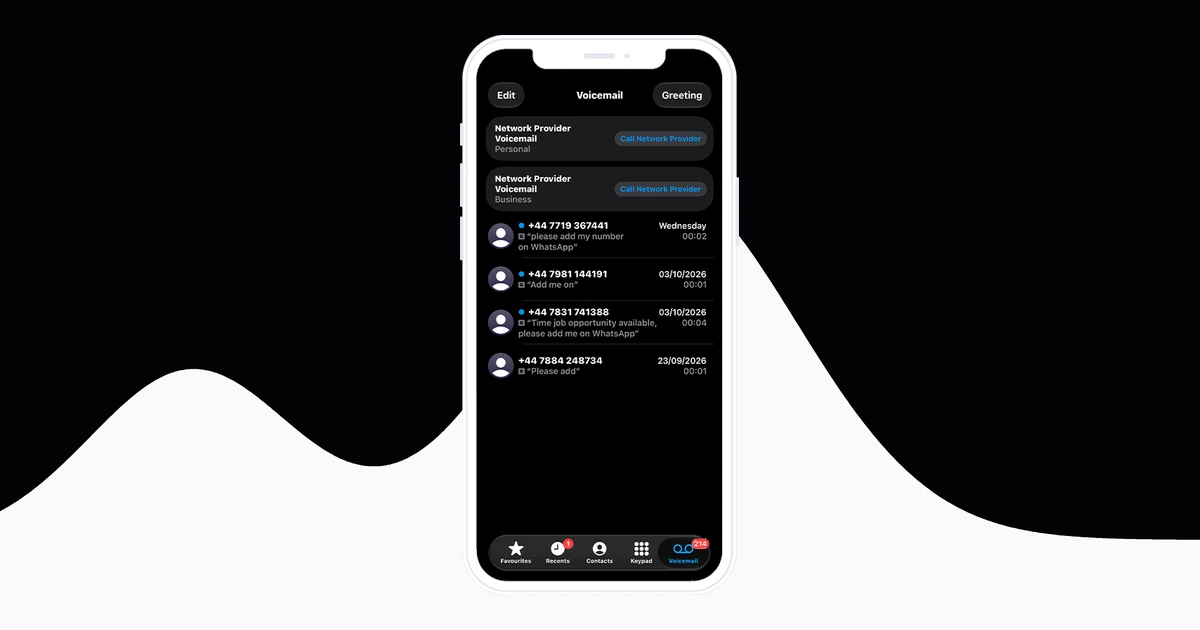
So people meet CIFAS at their lowest point. Account closed, card declined, applications refused, no idea why. They come to the fight exhausted and already on the back foot, against organisations that do this every day.
You're told about CIFAS when you don't need to know, and kept in the dark when you do.
A private database, now in government hands
CIFAS isn't part of the government. It's a private, not-for-profit company, paid for by its members: the banks and companies that file the markers.
In September 2026, Companies House joined . That's the government body that registers every company and checks who's allowed to be a director.
CIFAS's chief executive called it "a landmark moment for the UK's fraud prevention ecosystem ". We agree it's a landmark, just not the kind they mean. In our view, it's a landmark for everyone on the list: a suspicion that once followed you to the bank can now follow you to the register of who's allowed to run a company.
And it isn't the first. According to CIFAS's own website :
- Government departments, councils and law enforcement already add data to the database.
- The National Crime Agency and the National Fraud Intelligence Bureau use CIFAS data and systems.
- Councils use it to screen job applicants. CIFAS reports one London council refused employment to 36 candidates in a single year.
The gateway is section 68 of the Serious Crime Act 2007 , which lets public bodies share information with CIFAS to prevent fraud. The law was passed in 2007, but each new public body has plugged in quietly, one membership at a time, without public debate.
So one bank's suspicion can now sit in front of the police, a council deciding whether to hire you, and the body that decides who can run a company. Every new body makes a private accusation more powerful. Not one adds a safeguard for the person accused.
Run a limited company? You're even more in the dark. Data protection law protects people, not companies, so a company has no right to see or challenge what's held about it. Only its directors can ask about themselves.
A government body is meant to meet a higher standard than a bank: to be fair, and to explain itself. If it's going to rely on CIFAS markers, everyone affected deserves to see the evidence behind them.
Your accuser is your judge
They tell you that you can ask for your information for free, complain for free, and that you don't need anyone's help. So you ask. Here's what you get:
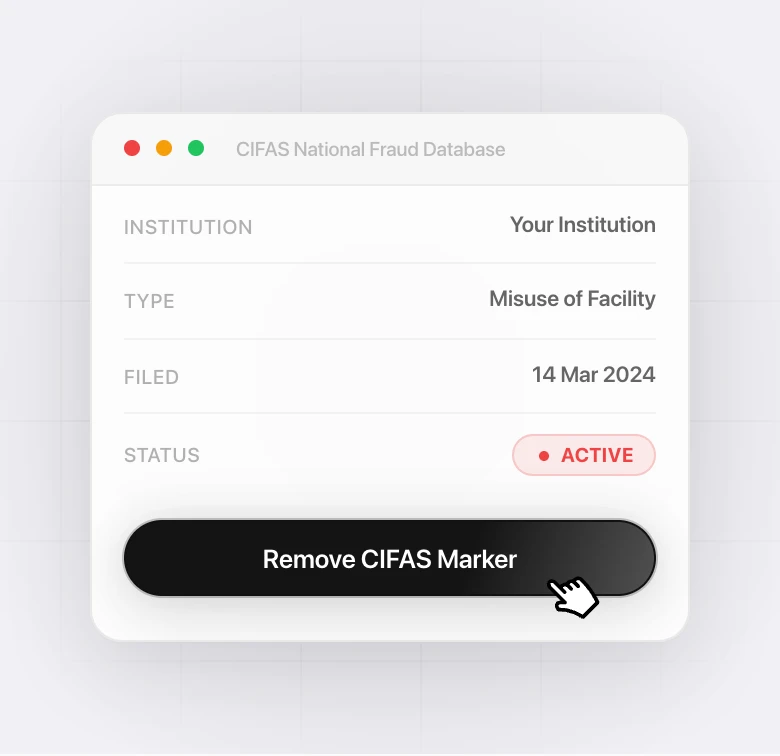
- A label, not a reason. You're told the type of marker, like "misuse of facility", but not what you're supposed to have done or what proof they have.
- Pages blacked out. The important parts are hidden, or left out completely.
- "We can't tell you." Banks lean on a part of the law that lets them withhold information to prevent crime. It's meant for real, live investigations. It gets stretched over almost everything.
- Passed back and forth. The bank tells you to ask CIFAS. CIFAS tells you to ask the bank.
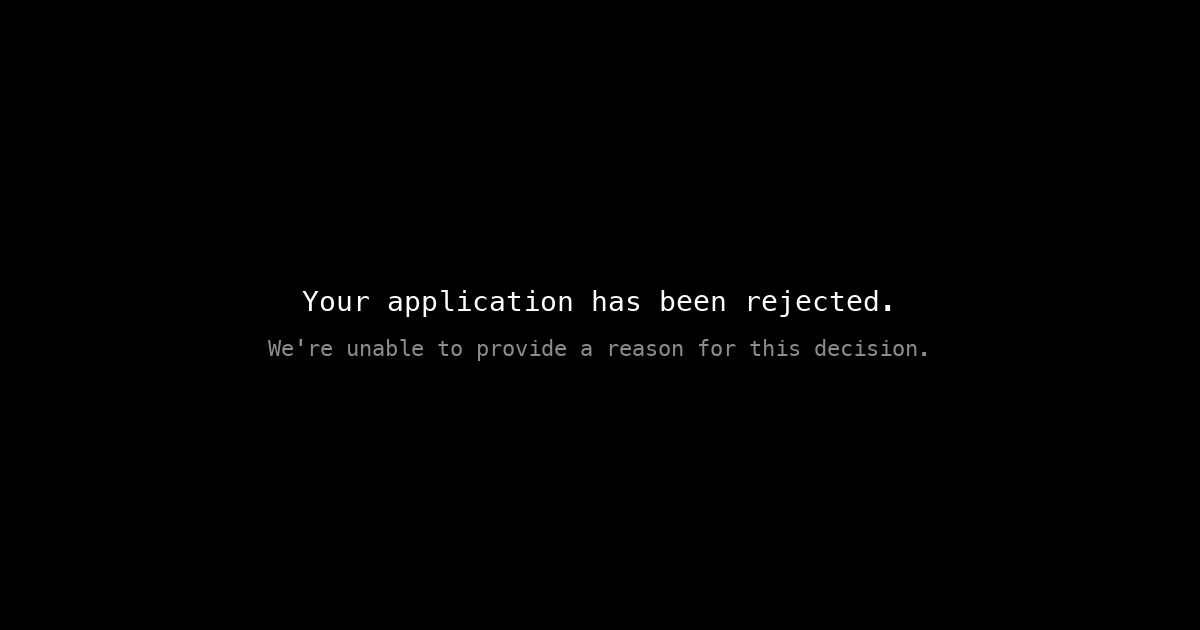
- Then a no. Your complaint is rejected because you haven't proved them wrong.
Secret evidence, and the burden on you to beat it. That isn't innocent until proven guilty. It's guilty, and good luck: procedural injustice from the second your marker is recorded.
Why would you trust the hand that locked you in to show you the way out?
The free route takes you back to the bank that marked you, so the accuser decides whether you're innocent. Then to CIFAS, which that same bank helps fund. The referee is paid by the other team.
And it's a well-funded referee. CIFAS turned over £16.8 million last year, holds almost £9 million in cash and is backed by nearly 800 members, according to its accounts at Companies House . On the other side is you, alone, possibly without a working bank account, in the middle of a cost of living crisis.
Then comes the line that does the most damage: you don't need a specialist. It sends someone frightened, with no legal knowledge, up against a fraud team, a complaints department and a database operator, alone. They know the rules, the exemptions and exactly how to word a rejection. You don't even know what to ask for. "You don't need help" doesn't close that gap. It hides it, and quietly turns your accuser into your guide.
Free is not the same as independent. You don't need to believe in a conspiracy to see it. It's simply how the process is set up, and it's sold to you as something it isn't.
Why nobody believes you
The cleverest part of this system is its name. It's called fraud prevention, and who's going to argue against preventing fraud?
That label does the heavy lifting:
- Question the system, and it sounds like you're defending fraud.
- Get a marker, and you become "the fraud suspect". Not proven. Not charged. Just labelled.
- Once you're labelled, people stop believing you. Friends, employers and other banks assume that if fraud is mentioned, you must be the problem.
- So the people who know best how the system really works are the ones nobody listens to. The people it has wrongly marked have the first-hand experience, and the label silences them.
- Everyone who uses the database gets the same respectable cover. Banks, councils, government departments and law enforcement can all say they're just preventing fraud.
- The ways out are run by the other side. And the Financial Ombudsman only covers financial businesses, so if a public body records or relies on a marker, that route doesn't exist at all.
- And slowly, you start to believe it's you.
Then the loop closes. You carry the blame, the institution keeps its reputation, and nobody ever asks whether the bank got it wrong. Trust in the banks stays untouched, not because anyone proved them right, but because the people who could prove them wrong are the people nobody believes.
If you've ever wondered whether it really was your fault, that feeling isn't proof you did anything wrong. It's what this system does to people. It doesn't just lock you out. It gets you to stop fighting.
The numbers they don't tell you
If the bank says no, you're told to go to the Financial Ombudsman Service. It sounds like your safety net. So we checked every published ombudsman decision that mentions CIFAS. There are 2,316 of them.
Only about 1 in 4 people won. And it's getting worse:
| Year | Decisions | Upheld | Upheld rate |
|---|---|---|---|
| 2021 | 210 | 73 | 34.8% |
| 2022 | 221 | 81 | 36.7% |
| 2023 | 219 | 73 | 33.3% |
| 2024 | 277 | 80 | 28.9% |
| 2025 | 385 | 92 | 23.9% |
| 2026 (to 20 October) | 451 | 62 | 13.7% |
Since 2022, more than twice as many people have been forced to go to the ombudsman, and their chance of winning has dropped from more than 1 in 3 to about 1 in 7. More people pushed through the system. Fewer getting out the other side.
The rules haven't changed. Banks are still meant to have clear, strong evidence before adding a marker. So why are more people losing? In our view, because in practice the job of proving things has quietly shifted onto you.
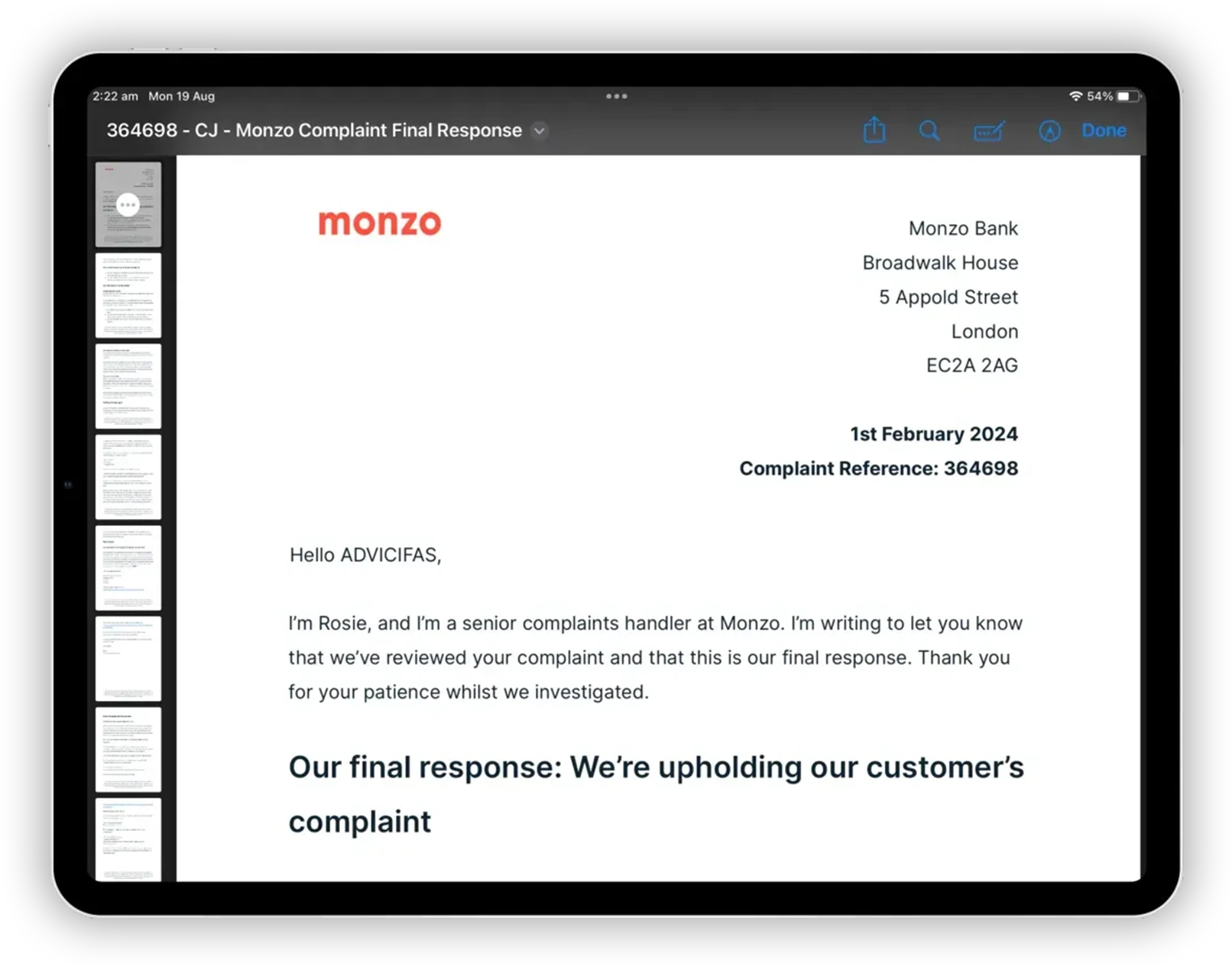
Some banks are worse than others. Complaints about Revolut succeeded only about 1 in 10 times. Monzo and Starling, about 1 in 7.
And that's only the people who made it that far. Banks don't publish how many marker complaints they reject themselves, and most people give up long before the ombudsman.
How we counted. On 20 October 2026 we searched the Financial Ombudsman Service decisions database for the keyword "CIFAS", with no other filters. The database returned 2,316 final decisions: 609 marked "Upheld" and 1,707 "Not upheld". Yearly figures come from running the same search with the database's own date and outcome filters for each calendar year. Anyone can repeat this and get the same numbers, though totals will grow as new decisions are published.
To break the figures down by bank, we extracted 1,854 of the 2,316 individual decision records, about 80%, so bank-level figures are approximate. The database only holds final ombudsman decisions. It doesn't include cases settled earlier, or the people who gave up before they ever got that far, worn down by a process that outlasted them.
Some decisions mention CIFAS without the marker being the main issue. And "Upheld" includes partial wins, where the ombudsman agreed with only part of a complaint. So the real rate of people who won outright is lower still, and every one of the 1,707 "Not upheld" decisions is a case where the ombudsman didn't uphold any part of the complaint.
Destined for rejection, why follow their process at all?
What we think: not an accident, a choice
This section is our opinion.
We think this system was built by institutions, for institutions, and the innocent person caught in it was an afterthought. Not out of malice. Out of indifference.
We think "reasonable grounds" has become whatever a fraud team decides on a busy afternoon. On paper, the standard is high. In practice, we believe many markers rest on pattern-matching: an unusual payment, an automated flag, a customer who didn't answer the phone fast enough. Nobody outside the bank checks, so nobody finds out.
We think the crime prevention exemption is used as a shield far more than for its real purpose. Strong evidence ends arguments, so banks would have every reason to show it. When they keep refusing, we think the likeliest explanation is that it often isn't as strong as the marker suggests.
We think the falling ombudsman success rate is the system hardening, not people getting worse at complaining.
And we think it stops being an accident the moment everyone involved can see what it does. The banks know markers are rarely tested. CIFAS knows people are refused the evidence. The ombudsman publishes the falling success rates. Anyone with the power could publish error rates, require evidence to be shown, make banks tell people when they're marked, or fund genuinely independent help. None of them do. Seeing the harm, being able to stop it, and choosing not to, every single day, isn't an accident. It's a decision.
This isn't a conspiracy. In a way, it's worse: a system everyone involved can see is failing people, left exactly as it is. It lasts because the people it hurts are the least likely to be believed, to have money, or to know their rights.
People say the system is broken. We don't think it is. It works very well. Just not for you.
But it can be beaten
None of this means a marker is a life sentence. It means the free route, done alone and on their terms, is stacked against you.
When a bank is actually made to show its evidence, things change. The ombudsman's own decisions prove it:
- PrePay Technologies: the ombudsman said the rules make it clear that suspicion alone isn't enough to record a marker, and ordered it removed. (DRN-3089551 )
- Barclays: the ombudsman upheld the complaint and told the bank to remove the marker. (DRN-2368076 )
- TSB: the bank agreed to remove a marker once it was clear there was no basis for it. (DRN-3158162 )
The pattern is the same every time. Markers come off when the evidence is tested and it isn't there.
So your job isn't to prove you're innocent. It's to make them prove their case. Most people never get that far, because nobody tells them that's the fight.
What you can do right now, for free
You shouldn't have to fight this hard for information about yourself. But until things change, these steps put the pressure back where it belongs:
- Ask both the bank and CIFAS for everything they hold about you. This is called a subject access request . It's free, and they must reply within a month. Ask for the marker, the evidence, and their notes on why they added it.
- Don't accept blacked-out pages without a reason. If they hide something, ask them to explain exactly why each part is hidden.
- Ask what their evidence is. They're only supposed to add a marker with clear, strong proof. Ask them to show you what it is.
- Tell them in writing that you object to the marker. You have a legal right to object . Once you do, it's up to them to justify keeping it, not up to you to prove them wrong.
- Don't get passed around. Write to the bank and CIFAS at the same time, and tell both you expect a proper answer, not a referral to the other.
- Keep everything in writing. Dates, letters, emails. If they don't answer properly, you'll have the record.
- If you're a company director, or want to be, ask Companies House what it holds about you too.
Free isn't the same as fair
Nobody's against stopping fraud. But when "fraud prevention" becomes the cover for a database that punishes people without proof, hides the evidence, and leaves them almost no real way out, that isn't protection. It's harm with a respectable name.
If you've been told no, it doesn't mean the bank was right. It may just mean you were never shown what you needed to win.
ADVICIFAS does charge, and we're upfront about that. Most people come to us after hitting every wall in this article. Our members run their own cases, in their own name, with the knowledge and structure to make banks produce their evidence and follow their own rules. Because knowledge matters, and this system works best when you don't have it.
Six years is a long sentence to serve for something nobody had to prove. Don't accept a no based on evidence you were never allowed to see.

ADVICIFAS Pro
Unfairly
Labelled a Fraud
Risk by CIFAS?
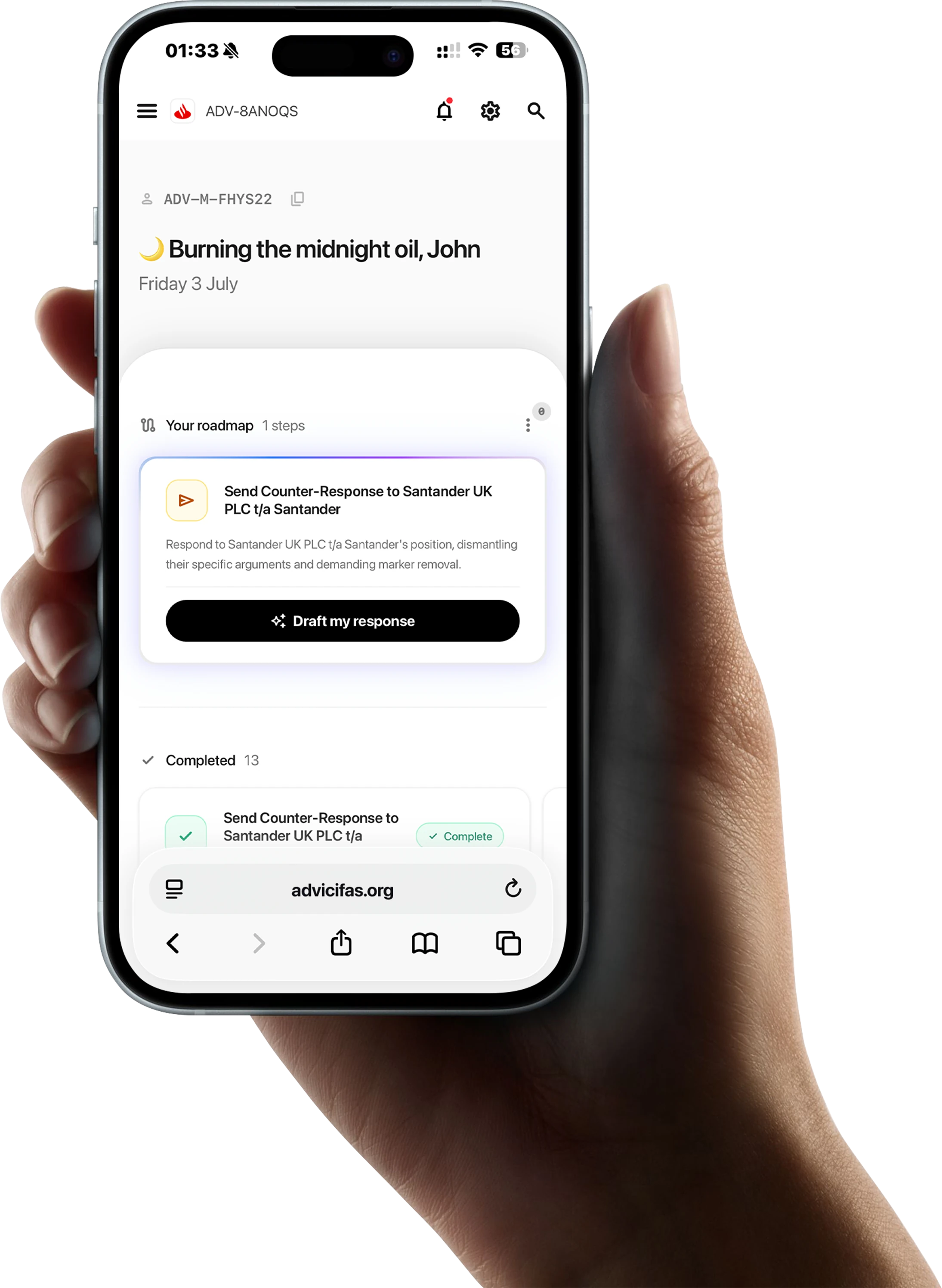
Remove It Like a Pro. Not templates. Not a solicitor. A system that builds your entire legal challenge from your report. £14.99/mo, accessible in minutes, cancel anytime.
Disclaimer
This article sets out the views and opinions of ADVICIFAS. Where we state facts, they are based on the sources listed below, which readers can check for themselves. Where we give our opinion, we say so. Ombudsman statistics are our own analysis of the Financial Ombudsman Service's published decisions as at 20 October 2026, and firm-level figures are approximate. Financial figures for CIFAS are taken from its accounts for the year ended 31 March 2026.
We do not suggest that every CIFAS marker is wrongly recorded, or that any named organisation has acted unlawfully. Our concern is with how the system works in practice for people who are wrongly marked.
This article is general information, not legal advice. ADVICIFAS is a specialist advocacy organisation, not a firm of solicitors.
Sources
- CIFAS: Companies House joins CIFAS' National Fraud Database
- CIFAS: Cifas for the Public Sector
- Companies House: CIFAS filing history and accounts
- Financial Ombudsman Service: decisions database
- Financial Ombudsman Service: DRN-3089551 (PrePay Technologies)
- Financial Ombudsman Service: DRN-2368076 (Barclays)
- Financial Ombudsman Service: DRN-3158162 (TSB)
- Which?: Some banks wrongly closing customer accounts in more than three in 10 disputed cases
- legislation.gov.uk: Serious Crime Act 2007, section 68
- legislation.gov.uk: UK GDPR, Article 15 (right of access)
- legislation.gov.uk: UK GDPR, Article 21 (right to object)