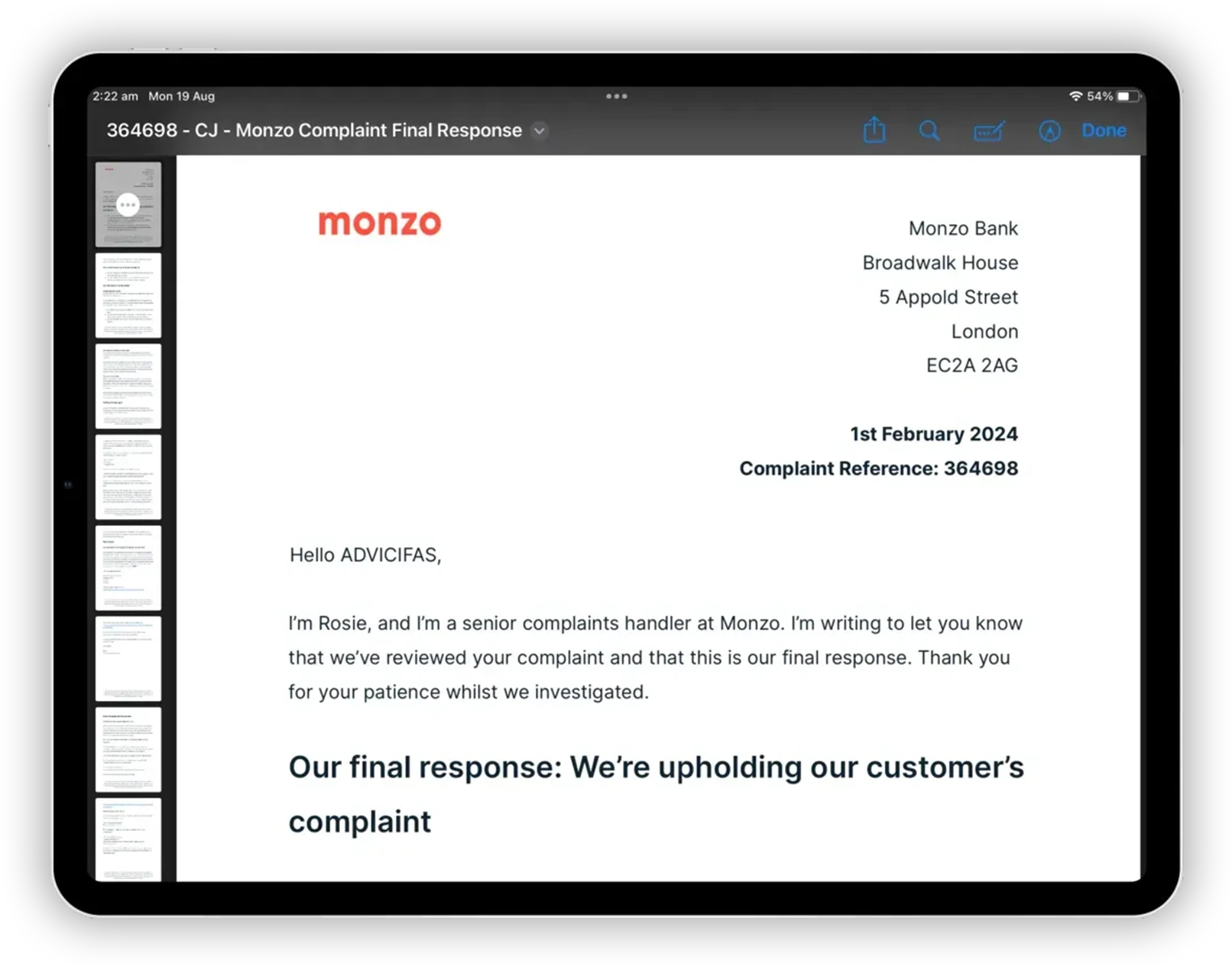
Yes. CIFAS markers are removed regularly. The reason is straightforward: CIFAS's own standard of proof requires clear, relevant and rigorous evidence that fraud was committed, and many institutions file markers without meeting that threshold.
The evidential threshold
CIFAS Principle 4 sets the standard every marker must meet. The filing institution must hold:
- Reasonable grounds to believe that a fraud or financial crime was committed or attempted
- Clear, relevant and rigorous evidence, not suspicion or pattern matching
- Conduct that meets the case type: what you did must meet the criteria of the marker filed, not merely be connected to fraudulent activity
- A product refused, withdrawn or terminated on the basis of fraud, unless an exception applies
- Evidence held at the time of filing: not gathered retrospectively to justify a marker that was already filed
This is a high bar. Suspicion, unusual activity, or conduct that is merely unexplained does not meet it. The burden of proof lies entirely with the institution; you do not need to prove your innocence.
Why markers get filed when they shouldn't
Institutions file markers for many reasons that don't meet the evidential threshold:
- Suspicion treated as evidence: the institution suspects fraud but can't prove the account holder knew about it or intended it.
- Victims labelled as perpetrators: people who were deceived, manipulated, or coerced into transactions are filed as if they were the fraudsters.
- T&C breaches confused with fraud: breaching the bank's terms and conditions (lending your account, missing payments, giving someone your details) is not fraud. A T&C breach does not justify a CIFAS marker.
- Negligence confused with dishonesty: being careless, naive, or failing to spot a scam is not the same as deliberately participating in fraud.
- Honest mistakes on applications: errors, misunderstandings, broker mistakes, or outdated information on an application are not false representations with intent to deceive.
- No contact before filing: CIFAS guidance requires institutions to contact the account holder before filing in many circumstances. Many don't.
The system identifies which of these grounds applies to your specific case during registration and builds your challenge around it.
Common marker types and their challenge grounds
Misuse of Facility
The most common marker type. Filed when the institution believes the account was used for fraudulent purposes. Challenge grounds typically include:
- You were deceived into allowing transactions (money muling through a job scam, romance scam, or investment scam)
- Someone else used your account without your knowledge (partner, family member, or through account takeover)
- You received legitimate funds and the institution later flagged the sender's source as fraudulent
- You were in genuine financial hardship and the activity was misinterpreted
- You were coerced or under duress
False Application
Filed when the institution believes false information was provided on an application. Challenge grounds include:
- An honest mistake or misunderstanding on the application
- A broker or intermediary altered or submitted incorrect information
- Identity theft: someone applied using your details
- Circumstances changed between application and verification (income, address, employment)
- Language or understanding barriers that led to errors
Facility Takeover
Filed when someone else took control of your account. If you are the victim of the takeover, this marker should not be filed against you; it should be filed as a Victim of Takeover (protective marker).
The legal framework
Markers can be challenged on multiple legal grounds simultaneously. The system uses all applicable frameworks; see What the system cites for the full list. The key ones for removal are:
- CIFAS Principle 4: the institution must hold clear, relevant and rigorous evidence, at the time of filing, giving reasonable grounds to believe fraud was committed.
- UK GDPR Article 5(1)(d): personal data must be accurate. If the marker implies fraud where there was none, it's inaccurate.
- UK GDPR Article 16: you have the right to rectification of inaccurate data.
- UK GDPR Article 17: you have the right to erasure where the processing is no longer justified.
- FCA Consumer Duty: if you're vulnerable (mental health, coercion, financial hardship), the institution has enhanced obligations.
What happens when it's removed
When the institution confirms removal, the marker is deleted from the CIFAS database. This means:
- Other institutions can no longer see it: CIFAS checks run by banks, lenders, and employers will come back clean
- Applications are no longer affected: bank accounts, credit cards, mortgages, loans, phone contracts, and employment checks that were being declined should no longer be blocked by the marker
- The removal is permanent: the institution can't refile the same marker once it's been removed through a challenge
If the marker was filed incorrectly, you may also have grounds for a compensation claim for the harm it caused: declined applications, lost employment, financial loss, and mental health impact.
How long does it take?
It varies by case:
- Some markers are removed after the first letter: the institution reviews the challenge and concedes.
- Most cases see movement within 4-6 weeks: institutions have 8 weeks to respond to a formal complaint.
- Some require multiple rounds: rejection, counter response, further escalation. Each round strengthens the case.
- External escalation is available: CIFAS direct challenge, Financial Ombudsman, and ICO complaints are binding routes that institutions cannot ignore.
The system manages the entire escalation process automatically; you follow the roadmap, and the pressure builds until the marker is removed.
What if I do nothing?
The marker stays on record for 6 years from the date it was filed. During that time:
- Bank accounts: declined or closed
- Credit: credit cards, loans, and overdrafts refused
- Mortgages: applications declined
- Phone contracts: refused on credit check
- Employment: financial services roles require clean CIFAS checks
- Insurance: some policies declined or premiums increased
The impact compounds every month the marker remains. Challenging it now means you could have it removed in weeks rather than waiting years for it to expire.