You don't manage escalation. The system does. Based on the institution's responses (or lack of them), your case timeline, and documented regulatory failures, the system determines when and how to escalate, and creates the steps in your roadmap automatically.
The escalation levels
Pressure builds through a sequence of escalation levels. Not every case goes through all of them; many markers are removed early. The levels are:
- Formal complaint: your first challenge to the institution, citing the specific legal grounds for removal.
- Chaser: if they don't respond within the statutory timeframe, the system creates a chaser automatically.
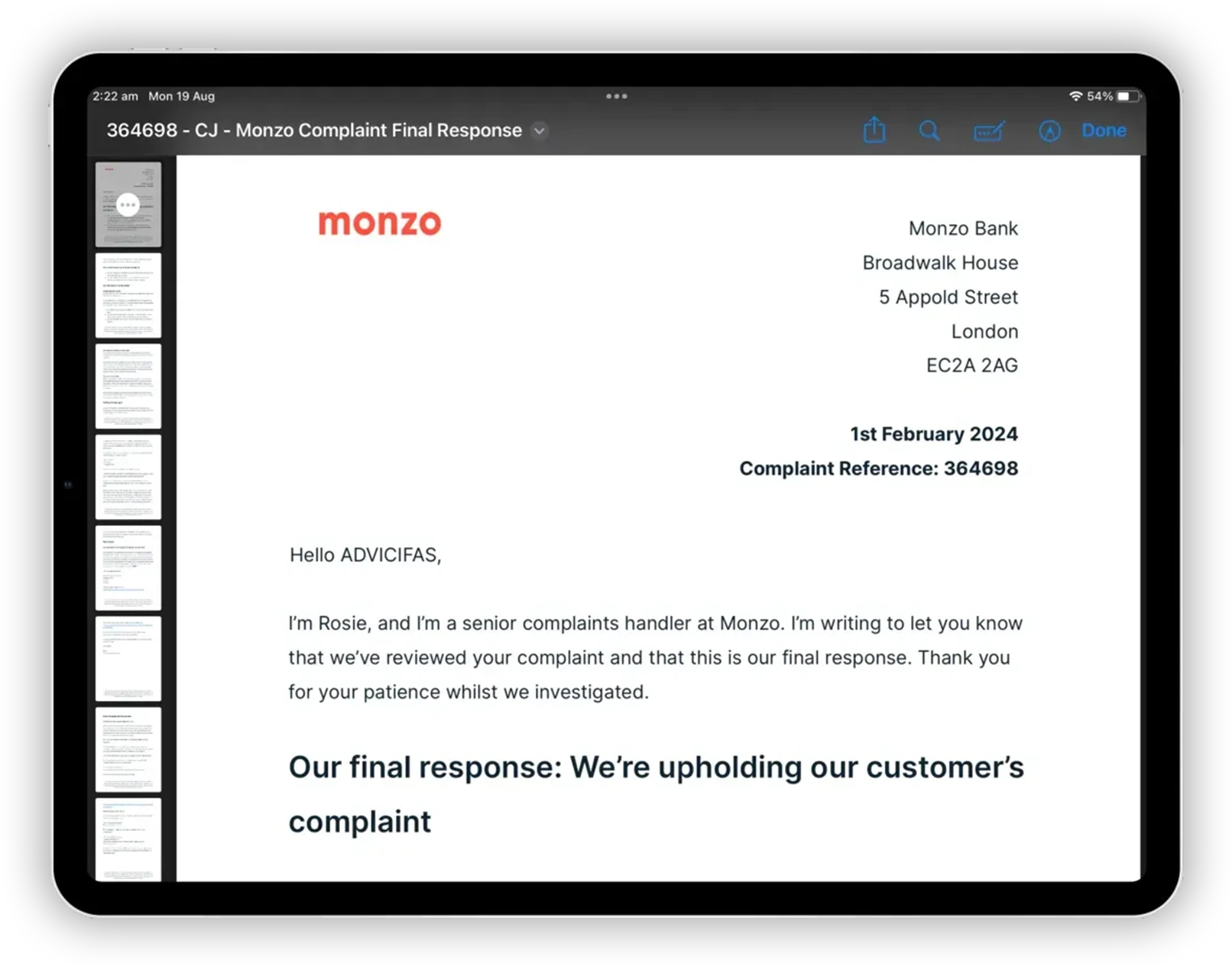
- Counter response: if they reject your complaint, the system analyses their response for weaknesses and creates a counter response step. See Uploading an institution response.
- GDPR challenge: invoking your data accuracy and erasure rights under UK GDPR Articles 16 and 17.
- Social media pressure: public accountability via social media platforms targeting the institution.
- CIFAS direct challenge: challenging the marker directly with CIFAS, bypassing the institution.
- Financial Ombudsman referral: referring the complaint to the FOS for a binding decision.
- ICO complaint: filing a data protection complaint with the Information Commissioner's Office based on documented GDPR breaches.
The system tracks which levels have been reached and which are available. Not all levels are available from the start; the system manages which escalation routes are appropriate based on your case timeline.
How escalation is triggered
Escalation steps appear in your roadmap automatically. You don't choose when to escalate. The triggers are:
- Institution rejects your complaint: counter response step created automatically. Every time.
- Institution doesn't respond: chaser step created automatically after the statutory deadline passes.
- Institution misses a statutory deadline: GDPR breach recorded automatically and cited in the next letter.
- Escalation route becomes available: the system creates the appropriate step when your case timeline makes it eligible.
- Institution partially concedes: counter response step created targeting what they didn't concede.
You review and send every letter. But the decision of what to send and when is made by the system based on your case state.
Every letter gets stronger
Each escalation letter is built from everything that came before:
- Their own words: quotes from previous responses are used to dismantle their position
- Regulatory failures: every missed deadline, every incomplete response, every procedural failure is cited with specific dates and articles
- GDPR breaches: accumulated breach records are listed as evidence of non-compliance
- DSAR findings: if you've uploaded a Subject Access Request response, contradictions from their own records are woven in
- Institution intelligence: patterns from other cases against this institution inform which arguments to deploy
- Documented impact: the real-world harm the marker has caused (financial, employment, housing, mental health) is quantified and cited
The longer the institution delays or deflects, the more ammunition the system has. This is by design; every failure they make strengthens your next letter.
What you do vs what the system does
| You | The system |
|---|---|
| Upload institution responses | Analyses response, determines outcome, creates next step |
| Review letters before sending | Generates letters from full case context |
| Send letters | Decides which letter type, which arguments, which legislation |
| Upload evidence | Analyses, rates, and references it in the right letters |
| Answer some questions | Creates the step, determines what to provide or refuse, drafts the response letter |
| Confirm details from evidence | Detects observations that need confirming, creates clarification step, feeds confirmed facts into future letters |
| Record life impact updates | Cites documented harm in escalation letters |
The escalation tab
Your case page includes an Escalation tab that shows:
- Current pressure phase: where you are in the escalation sequence
- Letters sent: how many letters have been sent and their types
- Days since case opened: total case duration
- Days since last action: time since the last letter was sent or response received
- Institution response count: how many times they've responded
Most markers don't reach the end
The escalation system goes up to 8 levels, but most cases don't need all of them. Many markers are removed after the first complaint or the first counter response. The institution knows the escalation path exists, and that's often enough.
If the institution removes the marker at any point, upload the confirmation and the system creates a confirmation step to close your case.