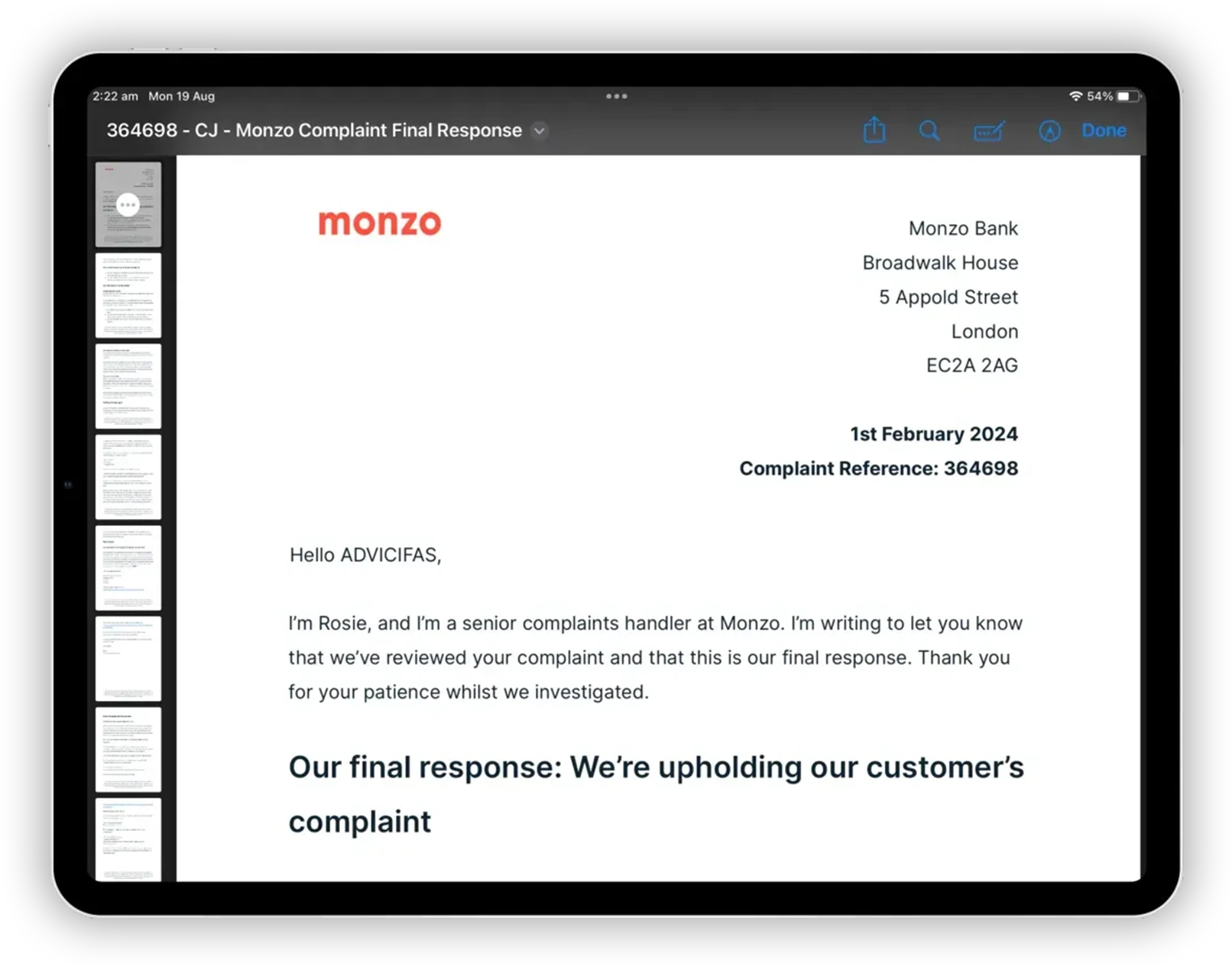
Your institution has a playbook. They use similar arguments, similar language, and similar tactics across many cases. The system knows this because it learns from every case it sees.
When a letter is generated for your case, it doesn't just use your data; it draws on anonymised intelligence from other cases against the same institution. This means your first letter is already informed by what's worked before.
What the system knows about your institution
- Their typical arguments: the reasoning they commonly use to justify markers, so your letters can pre-empt and dismantle them
- Their known tactics: how they typically handle challenges (delay, deflect, send to internal review, etc.)
- Their weaknesses: logical gaps, procedural failures, and regulatory shortfalls that they consistently exhibit
- What's worked against them: counter-arguments that have forced them to concede, remove markers, or escalate to review
- Arguments they fail to address: specific legal points they consistently ignore or sidestep, which become stronger with each unanswered repetition
- Concession signals: patterns in their responses that indicate they're moving towards removal or concession
- FOS precedents: Financial Ombudsman decisions where complaints against this institution were upheld
- Their privacy policy: analysed for transparency gaps, weak legal basis claims, vague CIFAS disclosure language, and missing Article 21 notification
How intelligence is gathered
Every time an institution responds to any user's challenge, the system analyses that response and feeds the findings, anonymised, into the institution's intelligence profile. This means:
- More cases = better intelligence: the more challenges the system sees against an institution, the more accurate the profile becomes.
- Recent intelligence is prioritised: the system weights recent patterns more heavily, so your letters reflect the institution's current behaviour, not outdated tactics.
- Patterns are confirmed across cases: a weakness identified once is a finding. A weakness identified across multiple cases becomes a confirmed pattern.
No personal data from other users is ever shared. The intelligence is fully anonymised; the system learns from the institution's behaviour, not from other people's cases.
How it's used in your letters
When the system generates a letter for your case, institution intelligence shapes the strategy:
- Pre-emptive arguments: if the institution typically argues X, your letter addresses and dismantles X before they even raise it
- Targeted weaknesses: arguments are aimed at the specific gaps this institution is known to leave
- Effective counter-arguments: the system prioritises arguments that have successfully pressured this institution in other cases
- FOS precedent citations: where relevant, letters cite specific Ombudsman decisions against this institution
- Privacy policy contradictions: if their published terms contradict their actions, the letter cites their own policy against them
This is why even your first letter is informed; the system already knows your institution before you start.
700+ institutions covered
The system has intelligence profiles for over 700 CIFAS member institutions. Every institution that has ever filed a CIFAS marker is in the database. This includes major banks, building societies, lenders, insurers, telecoms, and fintech companies.
If your institution hasn't been challenged through the system before, the letters still cite the correct legislation and make the full legal arguments. The institution-specific intelligence layer adds on top of the baseline legal framework; it enhances, but it's not required.
Intelligence grows with your case too
As your own case progresses, the intelligence deepens:
- Their response to your complaint: analysed for new weaknesses, added to the profile
- Their response to your counter: further weaknesses and tactical shifts identified
- Their SAR response: internal records, investigation notes, and contradictions extracted
- Their missed deadlines: patterns of delay documented across the case
By the time your case reaches escalation, the system's understanding of your institution is comprehensive, informed by both cross-case intelligence and your specific interactions.