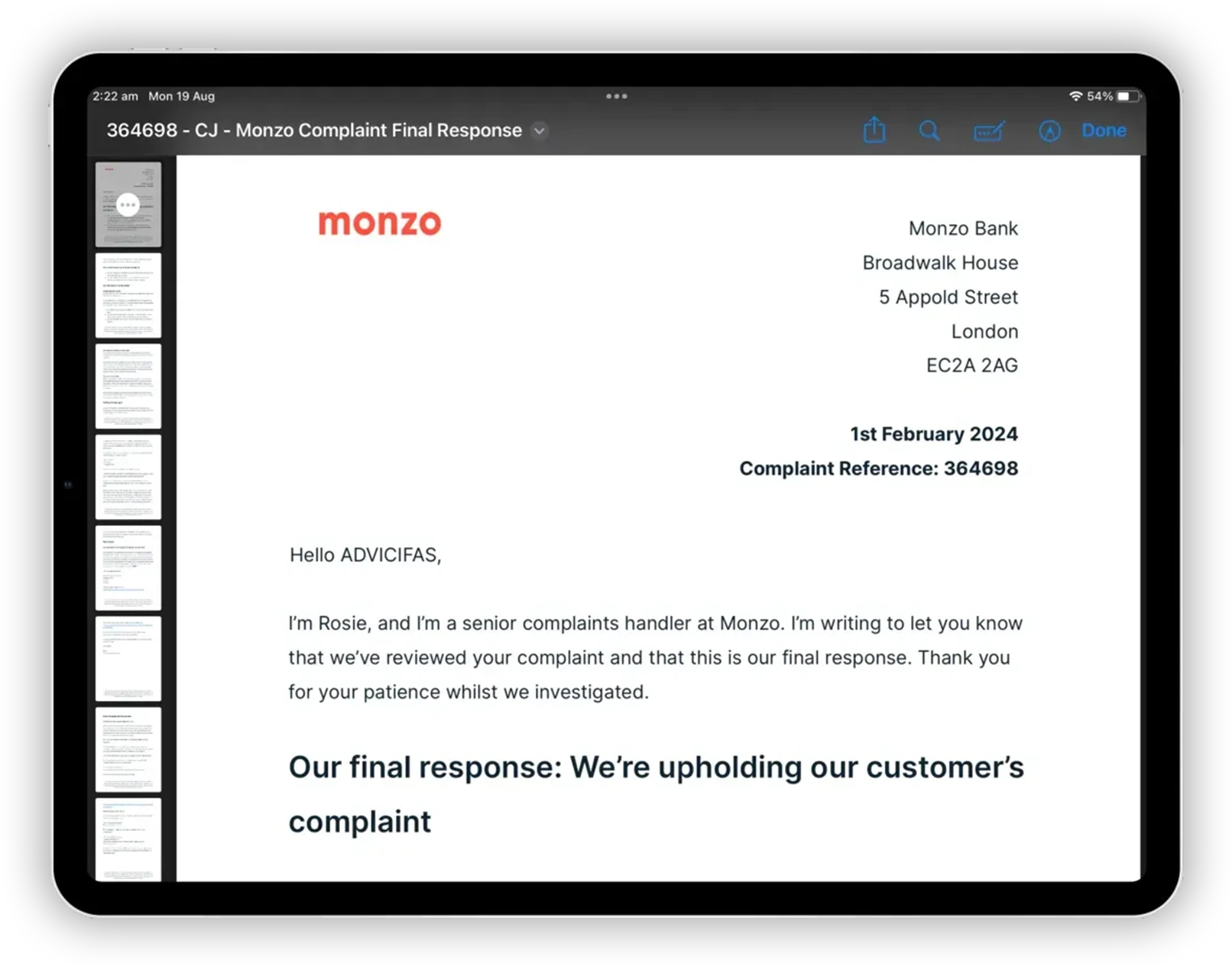
After you upload an institution response, the system analyses it and determines the outcome. Each outcome triggers a different next step in your roadmap.
You don't choose the outcome. The system reads the full response, identifies the institution's position, and classifies it automatically.
The outcomes
Rejected
The institution refuses to remove the marker and provides their reasoning. This is the most common initial outcome.
What happens: A counter response step is created automatically. The system has already extracted the weaknesses in their reasoning, their direct quotes, and their regulatory failures. Your next letter is built from what they got wrong. See How letters are generated.
Rejected with breach
The institution refuses to remove the marker, but their response also reveals a GDPR violation: a missed deadline, an incomplete SAR, a missing legal basis assessment, or a failure to provide required information.
What happens: A counter response step is created, and each breach is recorded automatically with the specific article, the type of violation, and a direct quote from their response proving it. These breaches are cited in future letters and strengthen your position for ICO referral.
Partial concession
The institution acknowledges there are issues with the marker and modifies it, but does not fully remove it.
What happens: A counter response step is created to push for full removal. A partial concession means the institution has admitted problems with their position; your next letter uses this admission against them.
Partial removal
The institution removes some categories from the marker but retains others. For example, they may remove the fraud marker but keep an identity theft category.
What happens: The system tracks exactly which categories were removed and which were retained. A counter response step is created targeting the remaining categories specifically.
Marker removed
The institution confirms the CIFAS marker has been removed in full.
What happens: All pending submission steps are cancelled; there's nothing more to send. A confirmation step is created for you to verify the removal. After confirmation, you can close the case.
This is the outcome everyone is working towards. When it happens, the system handles everything: cancels pending steps, creates the confirmation, and moves the case to resolution.
Acknowledged
The institution has acknowledged your correspondence but hasn't made a decision. This is a holding response: "we're reviewing it" or "we've received your complaint".
What happens: Your roadmap doesn't advance yet. The system is still waiting for a substantive response. Any active chaser steps remain in place. If a substantive response doesn't follow within the expected timeframe, the system escalates.
Information requested
The institution is asking you for specific information or documents before they'll continue processing your challenge. They may ask for identity verification, proof of address, transaction details, or an explanation.
What happens: A step is created at the top of your roadmap asking you to respond to their request. The system analyses what they've asked for, determines whether each item is reasonable, and helps you compile the response. The system also detects if they're asking for the same thing again.
SAR compliance
The institution has provided the data you requested in a Subject Access Request. This isn't a decision about the marker; it's the delivery of your personal data.
What happens: The system triggers forensic analysis of the SAR response. This runs in the background. When complete, the findings feed into your next letter.
SAR partial
The institution has responded to your SAR but the response is incomplete: data is missing, redacted without valid exemption, or doesn't cover the relevant time period.
What happens: The system analyses what was provided, identifies what's missing, and determines the next strategic move, which may be demanding the remainder or escalating the SAR non-compliance.
How you see outcomes
Outcomes appear in the Letters tab on your case page, shown as colour-coded badges next to the letter they're responding to:
- Red: Rejected (with or without breach)
- Amber: Partial concession or partial removal
- Green: Marker removed
- Blue: Acknowledged (holding response)
- Purple: Information requested
Each outcome also shows a brief summary and the top weaknesses the system identified in the institution's response.
Every response makes your case stronger
Regardless of the outcome, every institution response feeds into your case intelligence:
- Direct quotes are extracted: admissions, weak reasoning, and refusals, ready to be used in your next letter
- Weaknesses are identified: gaps in their logic, unsupported claims, contradictions
- Regulatory failures are documented: where they didn't follow proper procedure
- Intelligence is updated: the institution's response patterns are fed back into the system, strengthening the strategy for your case and others
Even a rejection is ammunition. The system quotes their own words back at them and dismantles their reasoning point by point. See How letters are generated.
After every response is analysed, the system automatically re-analyses your entire case with the new information. Your case intelligence is always up to date.