It depends on the institution and how they respond. There's no fixed timeline, but there are statutory deadlines the institution must follow, and the system tracks all of them.
Typical timeline
- First letter sent: within minutes of starting. The system generates your complaint from your case data.
- Institution response: they have 8 weeks to respond to a formal complaint. Many respond within 4-6 weeks.
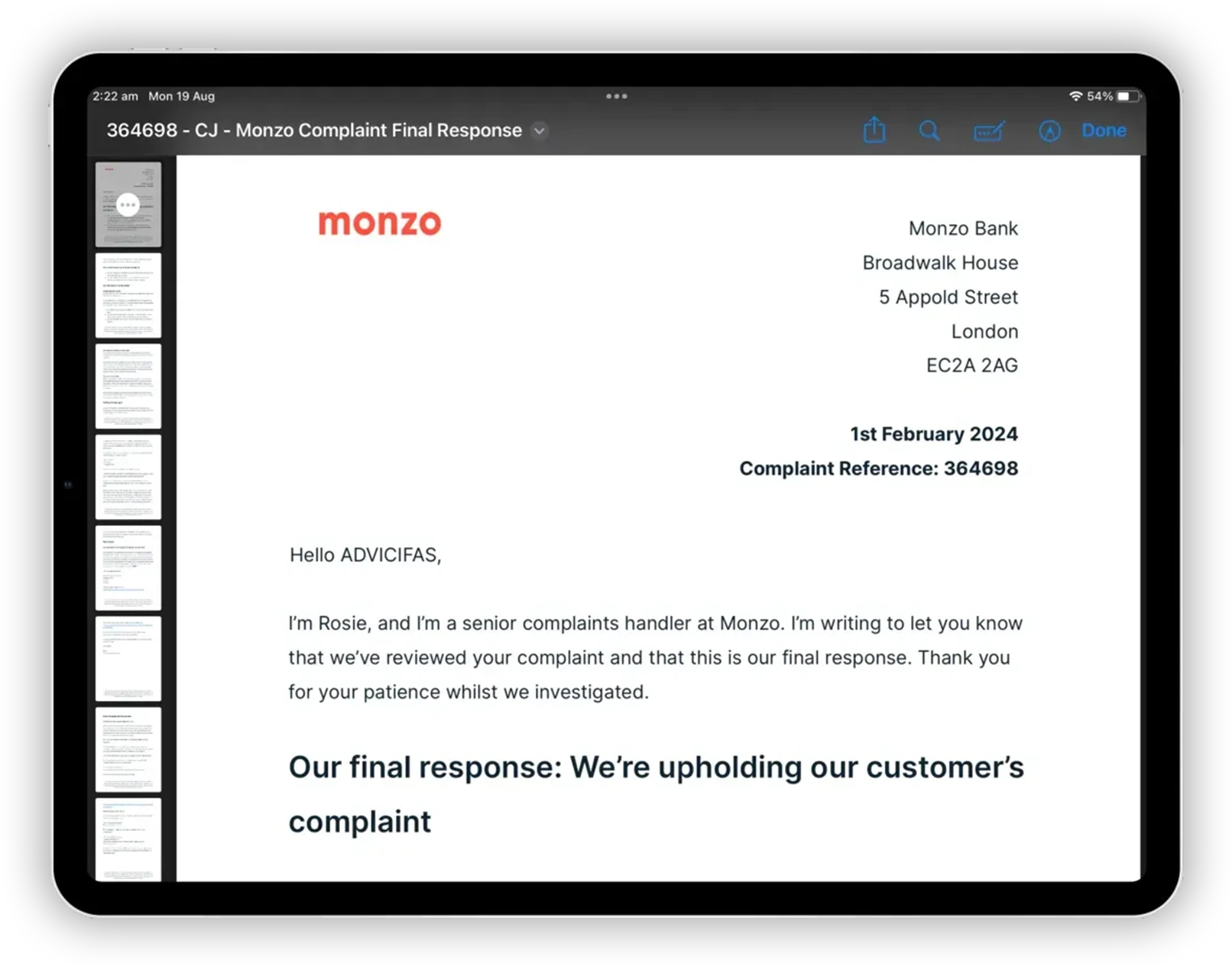
- If they reject: a counter response is created automatically. Another 8-week window begins.
- Escalation: if they continue to reject, the system escalates through up to 8 levels of pressure. External routes (CIFAS direct challenge, Financial Ombudsman, ICO) become available as the case progresses.
What you control
- How quickly you send: letters are generated in seconds. The sooner you review and send, the sooner the clock starts.
- How quickly you upload responses: when the institution responds, uploading it promptly means the next step is ready faster.
What the system controls
- Deadline monitoring: the system tracks every statutory deadline and creates chasers automatically when they're overdue
- GDPR breach recording: every missed deadline is recorded and cited in escalation letters
- Escalation timing: the system determines when escalation routes become appropriate based on your case timeline
Best case vs worst case
- Best case: marker removed after the first complaint letter. Some institutions review the challenge, recognise they can't meet the evidential threshold, and concede.
- Typical case: 2-3 rounds of correspondence over 2-4 months. Rejection, counter response, further escalation.
- Complex case: multiple rounds plus external escalation (CIFAS direct, FOS, ICO). Can take 6+ months. But the system manages it automatically; you follow the roadmap.
The alternative is waiting 6 years for the marker to expire. See What if I do nothing?