What happened to you
Someone contacted you, on Instagram, Snapchat, WhatsApp, TikTok, or through a friend of a friend. They had a proposition. Receive some money into your bank account, transfer it on, keep a cut. They called it "crypto conversion," "business payments," "forex trading," or just "a quick favour." It sounded easy. It sounded harmless. It wasn't.
The money that landed in your account was the proceeds of fraud: stolen from someone else through a scam, a hacked account, or an authorised push payment. You didn't know that. You didn't steal anything. You didn't hack anything. You were used as a pass-through, a "money mule", so the real criminals could distance themselves from the stolen funds.
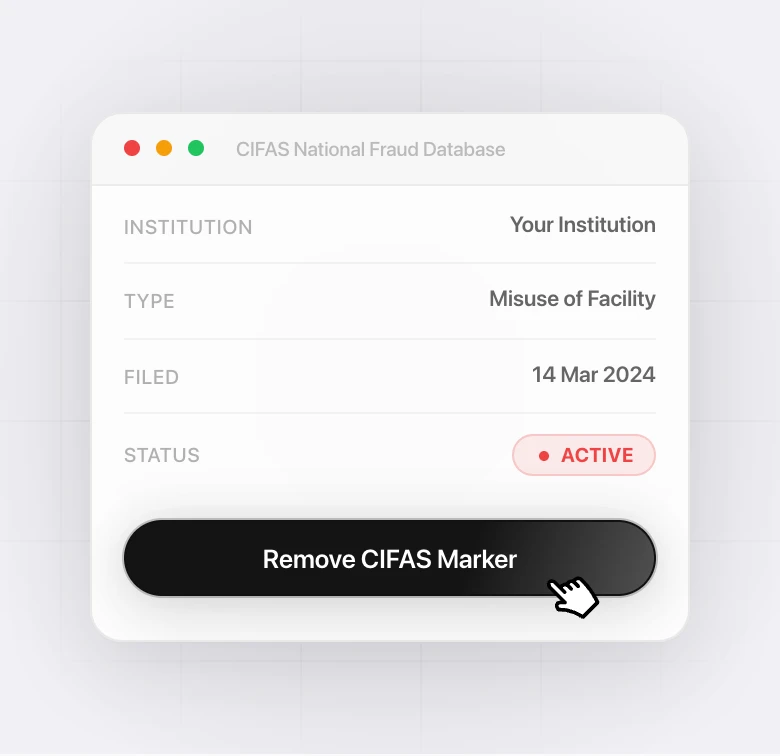
Within days or weeks, your bank froze your account. They asked questions you didn't know how to answer. Then they closed the account entirely, kept your remaining balance, and filed a Misuse of Facility marker on the CIFAS National Fraud Database. No hearing. No warning. No appeal at the time.
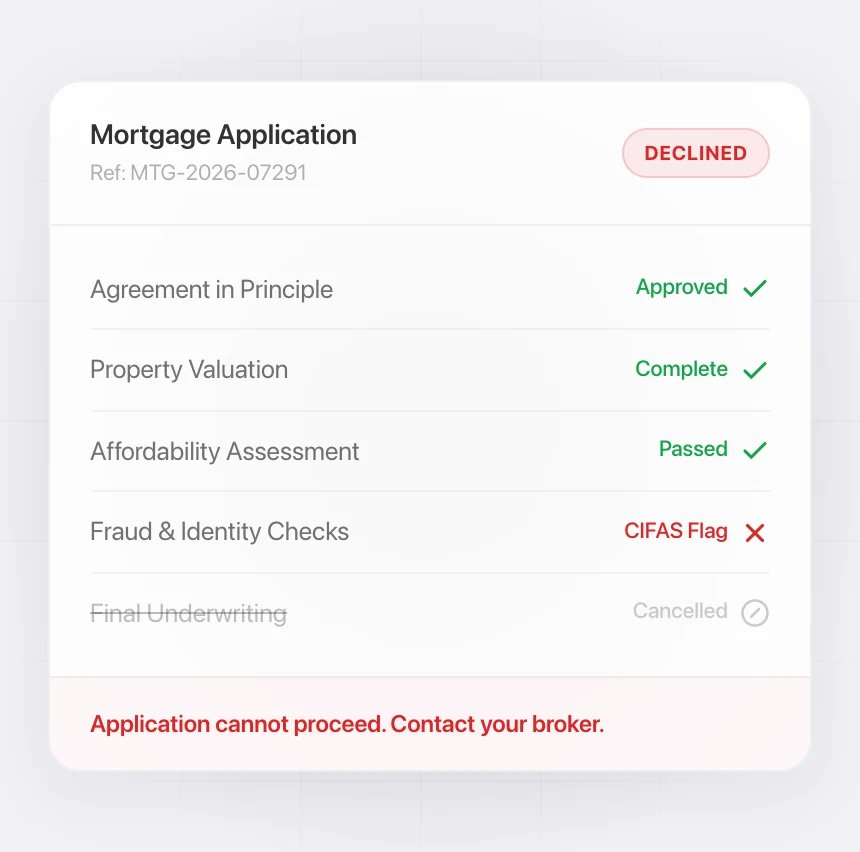
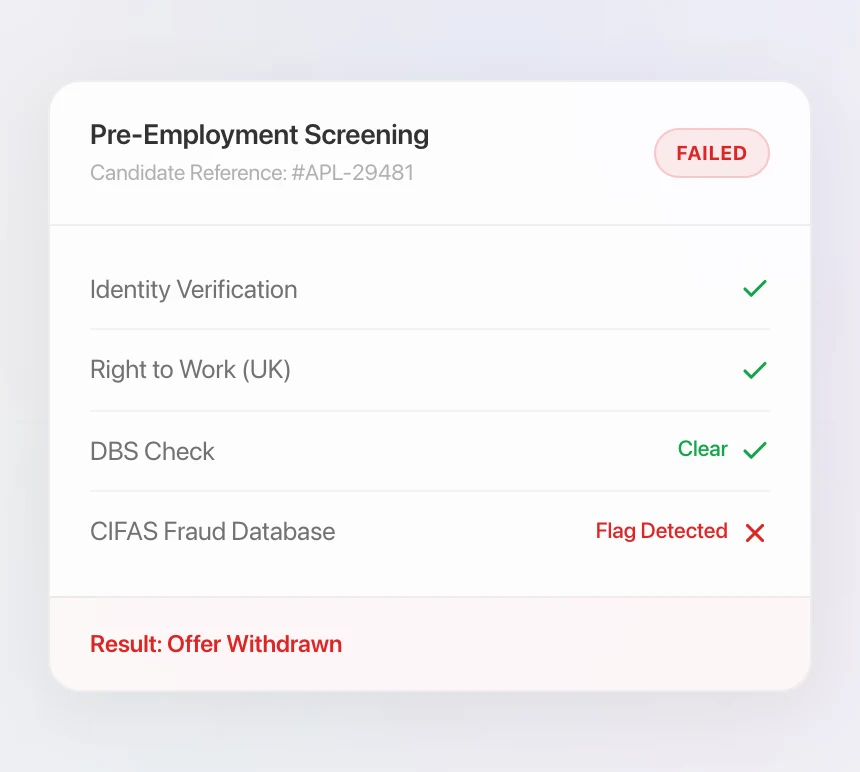
Now you can't open a bank account. You can't get a phone contract. Credit applications are declined. Job applications fail background checks. You can't get a mortgage. You feel like a criminal, but you were never charged with anything, never convicted of anything, and never given a chance to explain what actually happened.
If that's where you are right now, keep reading. Because the legal reality of your situation is very different from how it feels.
What the bank did and why
When your bank detected suspicious transactions, incoming funds from a fraud victim followed by rapid outward transfers, they flagged the activity internally. Their fraud team reviewed the pattern and concluded that your account was being used to move criminal funds. That conclusion triggered two things: account closure and a CIFAS Misuse of Facility marker.
A Misuse of Facility marker (Category 6) is filed when an institution believes an existing account or service has been misused for fraudulent purposes. It's the most common marker type on the CIFAS database, and the one most frequently filed against money mule suspects.
Under CIFAS filing rules, the institution is supposed to have evidence that meets a specific threshold before filing. That threshold is CIFAS Principle 4: there must be evidence of deliberate dishonesty. Not suspicion. Not unusual patterns. Not the mere fact that criminal money passed through the account. Deliberate, provable dishonesty.
Here's the problem: most banks file money mule markers based on the transaction pattern alone. Money came in from a fraud victim. Money went out quickly. That pattern is consistent with money muling, but it is equally consistent with someone who was deceived into allowing it. The pattern proves the activity happened. It does not prove you knew what you were doing.
Why being deceived is not fraud
This is the most important section of this article. Read it carefully.
CIFAS markers require evidence of deliberate dishonesty. That means the institution must be able to demonstrate that you knowingly participated in moving criminal funds. Not that you were careless. Not that you should have known better. Not that a reasonable person might have been suspicious. That you personally knew the money was criminal and chose to move it anyway.
Being deceived is the opposite of being dishonest. If someone lied to you about the source of the funds, manipulated you into participating, or presented the arrangement as a legitimate opportunity, then you are a victim of deception, not a perpetrator of fraud.
The distinction matters legally. Under CIFAS Principle 4, the institution must hold evidence that meets the standard for filing. A marker filed against someone who was tricked, groomed, or socially engineered into receiving funds does not meet that standard, because there is no evidence of deliberate dishonesty. There is evidence of naivety. There is evidence of poor judgment. But naivety and poor judgment are not fraud.
The Financial Ombudsman Service has upheld this distinction repeatedly. In money mule cases where the account holder was demonstrably deceived: particularly young people, students, and vulnerable individuals; the Ombudsman has ordered markers removed on the basis that the institution could not evidence the required intent.
A mistake is not fraud. Being naive is not fraud. Being trusting is not fraud. The CIFAS filing standard requires deliberate dishonesty, and if the bank cannot prove you knew the money was criminal, the marker does not meet that standard.
The numbers: you're not alone
According to CIFAS Fraudscape 2026, 444,993 markers were filed in 2025. Money muling accounts for a significant proportion of Misuse of Facility filings, and the demographics are striking.
- 64% of money mule cases involve someone under 30. Young people are disproportionately targeted by mule recruiters because they're more likely to be on social media, more trusting of peer referrals, and more financially vulnerable.
- Students are heavily represented. Mule recruiters specifically target students: people with active bank accounts, low balances, and a need for quick cash. University campuses, student Facebook groups, and student accommodation are common recruitment grounds.
- Many don't know they were muling. CIFAS's own research acknowledges that a significant portion of money mule cases involve individuals who did not understand the nature of the activity. They were told it was legitimate. They believed it.
- Social media is the primary recruitment channel. Instagram DMs, Snapchat stories, TikTok comments, and WhatsApp groups are where most mule recruitment now happens. The pitch is always the same: easy money, no risk, just use your bank account.
If you're reading this and recognising your own experience, understand this: you are not unusual. You are not uniquely foolish. You are one of tens of thousands of young people who were deliberately targeted by organised criminals precisely because you were trusting enough to fall for it. That's not a character flaw; it's what the criminals counted on.
Why your age and vulnerability matter
Since July 2023, the FCA Consumer Duty requires financial institutions to deliver good outcomes for customers, with particular regard for vulnerable customers. This is directly relevant to money mule CIFAS markers.
The FCA defines vulnerability broadly. It includes people experiencing financial difficulty, mental health conditions, life events, and, critically, limited financial experience or capability. A 19-year-old student with their first bank account who was groomed on social media into receiving fraudulent funds is, by any reasonable measure, a vulnerable customer.
When challenging a money mule marker, your age and circumstances at the time of the activity are directly relevant to the question of intent. The younger you were, the less financial experience you had, the more pressure you were under, and the more sophisticated the deception; the harder it becomes for the bank to argue that you acted with deliberate dishonesty.
Additional vulnerability factors that strengthen a challenge include:
- Mental health conditions: anxiety, depression, ADHD, or other conditions that affect judgment and decision-making.
- Financial hardship: being in debt, having no income, or being in a situation where the promise of easy money was especially compelling.
- Coercion or grooming: being pressured by someone you trusted, a partner, a family member, or someone who had social power over you.
- First offence: no prior history of fraud, no other markers, no criminal record. A single incident in an otherwise clean financial history points to deception, not dishonesty.
What the bank's evidence actually shows
When you submit a Subject Access Request to the bank that filed your marker, you'll receive their internal fraud investigation notes. In almost every money mule case, those notes contain the same things:
- Transaction records: showing funds received from a third party (the fraud victim) and subsequently transferred out.
- Timing analysis: showing the funds were moved quickly, often within hours of receipt.
- Source flags: showing the incoming funds were reported as fraudulent by the sending bank.
- Account activity patterns: showing the transactions were inconsistent with your normal account usage.
Notice what's missing from that list. There is no evidence that you:
- Knew the money was stolen.
- Had any contact with the original fraud victim.
- Were part of an organised criminal network.
- Had any prior involvement in fraud.
- Understood the legal consequences of what you were doing.
The bank's evidence proves the activity. It does not prove the intent. And intent is exactly what CIFAS Principle 4 requires. This gap between what the evidence shows and what the filing standard demands is where every money mule marker challenge begins.
Request a Subject Access Request from the bank that filed the marker. Under UK GDPR Article 15, they must provide their full internal file within one month. This will show you exactly what evidence they hold, and, critically, what they don't.

ADVICIFAS Pro Kit
Bank, Even With
a CIFAS Marker.
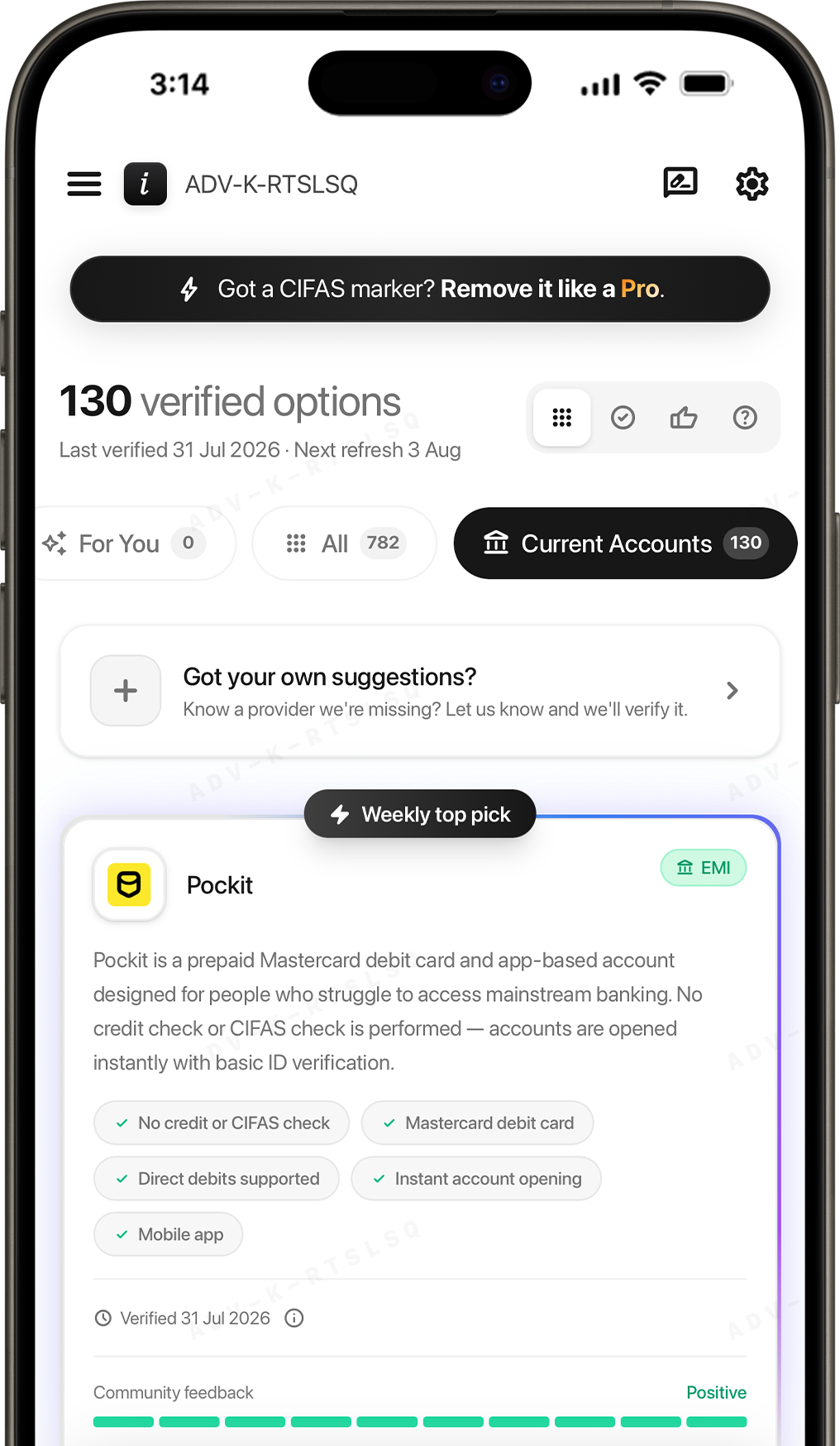
Stop getting rejected. We've found the ones that actually say yes. 700+ verified banks and EMIs that accept CIFAS-marked customers. £3.99/mo, cancel anytime.
The challenge process for money mule markers
Challenging a money mule CIFAS marker follows a structured escalation process. Each step builds pressure on the institution. Here's the path from start to finish.
Submit a Subject Access Request. Before you challenge anything, you need the bank's evidence. A SAR under UK GDPR Article 15 forces them to disclose their entire internal file: fraud investigation notes, decision logs, transaction flags, everything. This is your foundation. You cannot build an effective challenge without knowing what they actually hold.
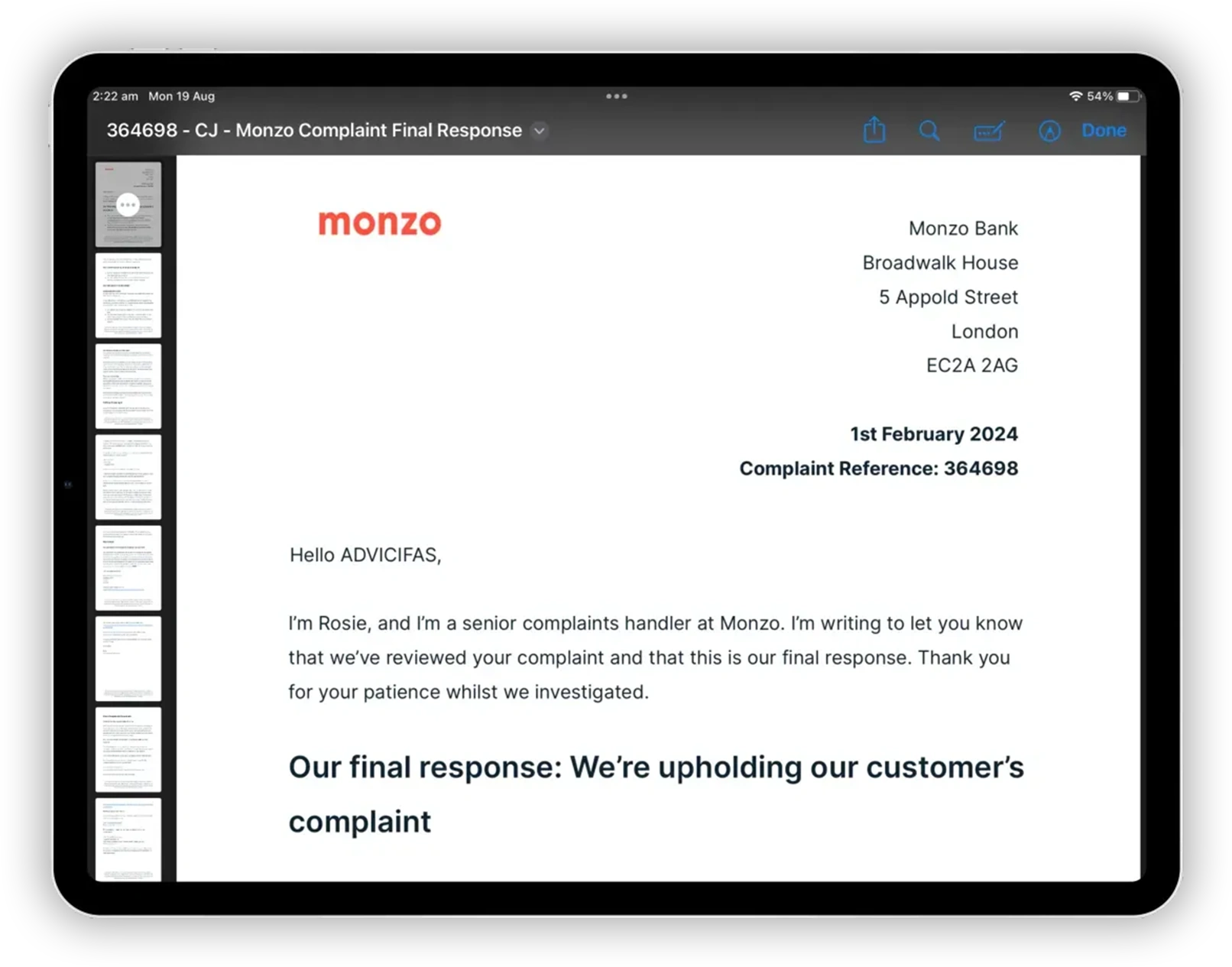
File a formal complaint targeting intent. Write to the institution's complaints team, not general customer service. Your complaint must specifically argue that their evidence does not demonstrate deliberate dishonesty. Reference CIFAS Principle 4. Explain the circumstances of how you were recruited. Make clear that being deceived is not the same as being dishonest. They have 8 weeks to respond.
Send a counter-response. The bank will almost certainly reject your initial complaint. Their rejection will contain specific reasoning: "the transaction pattern is consistent with money muling," "you benefited financially," "you failed to report the activity." Your counter-response must dismantle each point individually. This is where template-based challenges fail; the rebuttal must be specific to their arguments.
Escalate to the Financial Ombudsman. Once the bank issues a final response (or 8 weeks pass without one), you can refer to the Financial Ombudsman Service. This is free. The Ombudsman will review the bank's evidence independently and assess whether the marker meets the filing standard. In money mule cases where the account holder was deceived, the Ombudsman frequently orders removal.
Request a final decision if needed. If the Ombudsman investigator's initial view goes against you, you can request a final decision from a senior Ombudsman. This is a more thorough review and is legally binding on the institution. Many cases that lose at investigation stage succeed at final decision, particularly where vulnerability and deception are central to the case.
For the full eight-level escalation process (including ICO referrals, data protection challenges, and judicial review) see our complete CIFAS marker removal guide.
Common mistakes when challenging a money mule marker
Money mule cases are emotionally charged. That emotion leads to specific mistakes that undermine otherwise strong challenges.
Writing emotional letters
You're angry. You're scared. You feel branded as a criminal for something you didn't understand. Those feelings are valid, but they don't belong in your complaint letter. The bank's compliance team doesn't care how you feel. They care whether the marker meets the CIFAS filing standard. Every sentence of your challenge should address evidence, intent, and legal thresholds, not emotions. Save the impact statement for the Ombudsman stage, where it genuinely influences the outcome.
Admitting guilt or apologising
"I know I shouldn't have done it." "I'm sorry for what happened." "I accept I made a mistake." These phrases feel natural; you're trying to show you've learned. But in a CIFAS challenge, they are devastating. The bank will use any admission of knowledge or wrongdoing as evidence that you understood what you were doing. You can acknowledge the activity without admitting dishonest intent. There is a critical difference between "money moved through my account" and "I knowingly moved criminal funds."
Not addressing the legal threshold
Many challenges focus on explaining what happened; the story of how you were recruited, how you didn't know, how unfair it all feels. But the challenge isn't about your story. It's about whether the bank's evidence meets CIFAS Principle 4. Your letter must specifically ask: where is the evidence of deliberate dishonesty? If it doesn't ask that question (directly, clearly, repeatedly), it will fail.
Using generic templates
Every bank fraud team has seen every template circulating online. They recognise them from the first paragraph. A template doesn't reference your specific circumstances, doesn't address the bank's specific evidence, and doesn't cite the legislation relevant to your marker type. It gets a standard rejection. Read more about why templates and solicitors fail.
Contacting the police before challenging
Some people report themselves to the police, thinking it shows good faith. This is almost always a mistake. A police report creates a formal record that can complicate your challenge. The bank may argue that a police investigation validates their decision to file the marker. Unless you've been charged with an offence and need legal advice, focus on the CIFAS challenge first. The marker is a data protection and regulatory matter, not a criminal one.
What you can do right now
If you've just discovered you have a CIFAS marker from a money mule incident, here are the immediate steps:
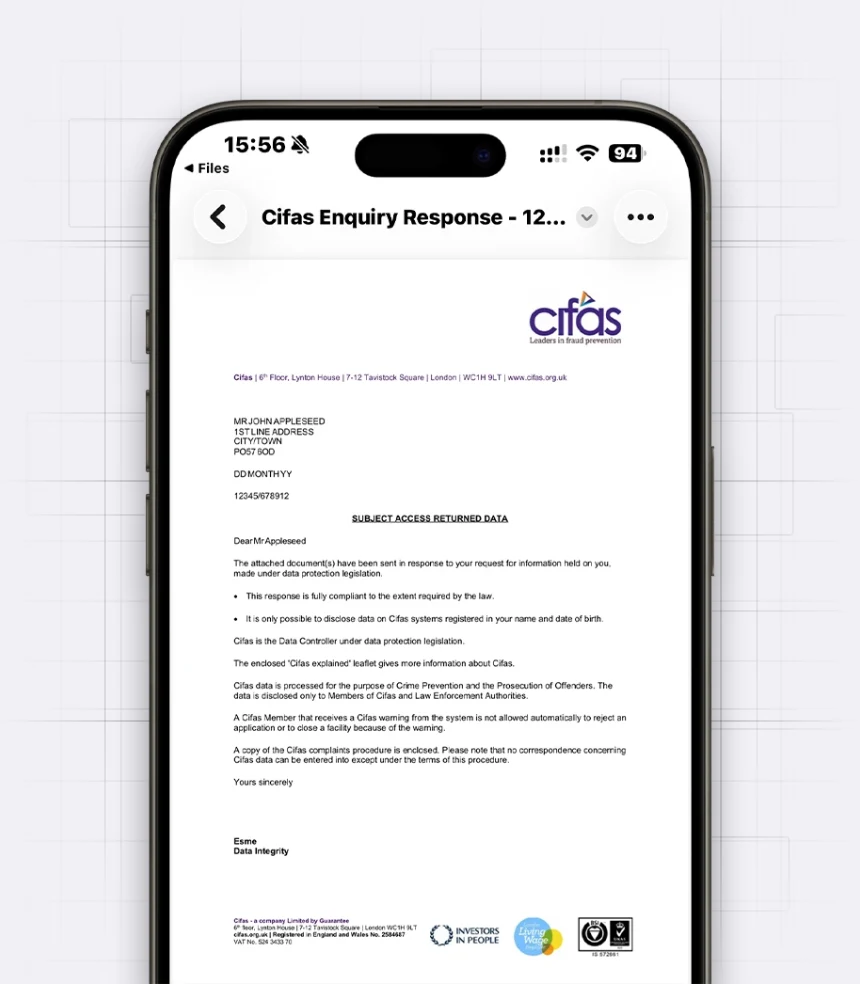
Get your CIFAS report. Submit a Subject Access Request directly to CIFAS. This will confirm the marker type, the institution that filed it, and the date. It costs nothing and they must respond within one month.
SAR the bank that filed it. Submit a separate SAR to the institution that filed the marker. Request their complete fraud investigation file, including all internal notes, decision records, and evidence relied upon. This is what you'll use to build your challenge.
Check your credit report. Use a free service like ClearScore, Credit Karma, or Experian to see whether the marker has affected your credit file. The CIFAS marker itself doesn't appear on your credit report, but the associated account closure, defaults, or declined applications will.
Don't post about it online. Social media posts, Reddit threads, and forum comments about your case can be found by the bank's legal team and used against you. Don't discuss specifics publicly. Don't name the bank. Don't describe the transactions.
Get banking access while you challenge. You need a functioning bank account during the challenge process. See our guide to bank accounts that accept CIFAS markers, several e-money providers and basic bank accounts remain available even with an active marker.
The marker is challengeable. In many money mule cases, the bank's evidence simply does not meet the threshold for filing. The activity happened, nobody disputes that, but activity without intent is not fraud. That's not an opinion. It's what the CIFAS rules require, what data protection law demands, and what the Financial Ombudsman enforces.
Find verified banking options with ADVICIFAS Pro Kit. Get access to banks and EMIs that accept CIFAS-marked customers, for £3.99/month, cancel anytime.
For institution-specific strategies, see our CIFAS marker removal guides.