What is a CIFAS marker?
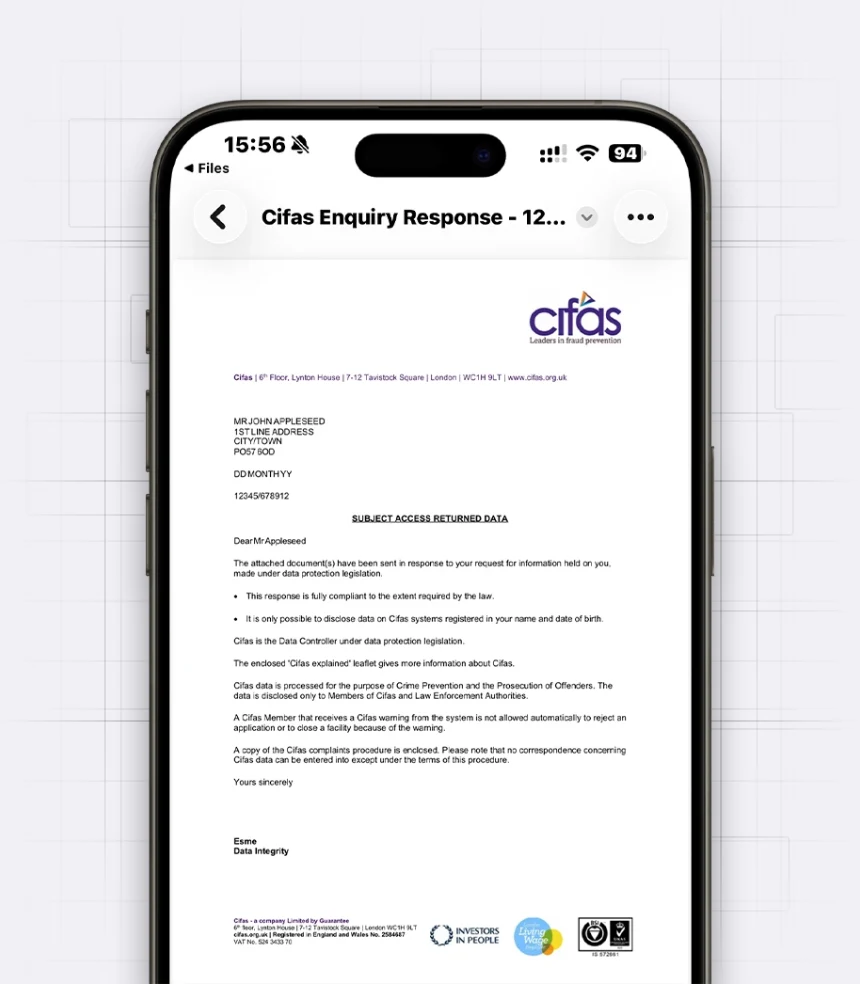
A CIFAS marker is a fraud flag filed against your name on the CIFAS National Fraud Database. It stays there for six years. During that time, over 775 member organisations (banks, lenders, insurers, telecoms, even employers) can see it every time they search your details.
According to CIFAS Fraudscape 2026, 444,993 markers were filed in 2025 alone. That's over 1,200 per day. And those are just the new filings, millions more remain active from previous years.
Here's what most people don't realise: a CIFAS marker is not a criminal conviction. There's no court hearing. No independent review. No notification in most cases. A single institution decides you've acted dishonestly and files a marker against you, unilaterally. Yet that marker functions as an effective blacklist across the entire UK financial system.
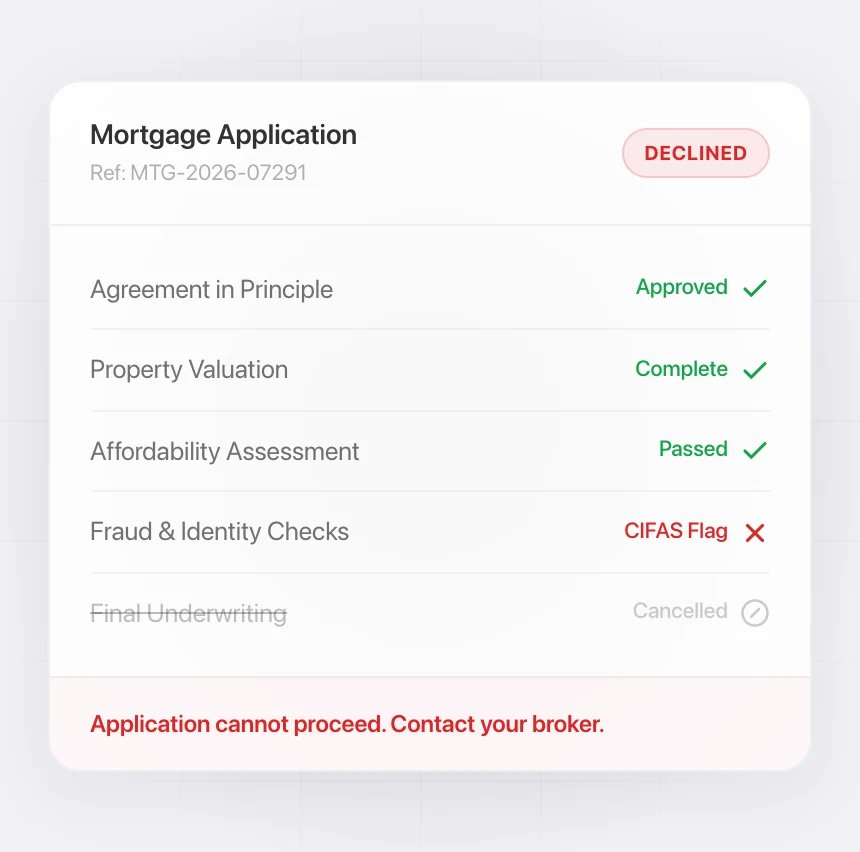
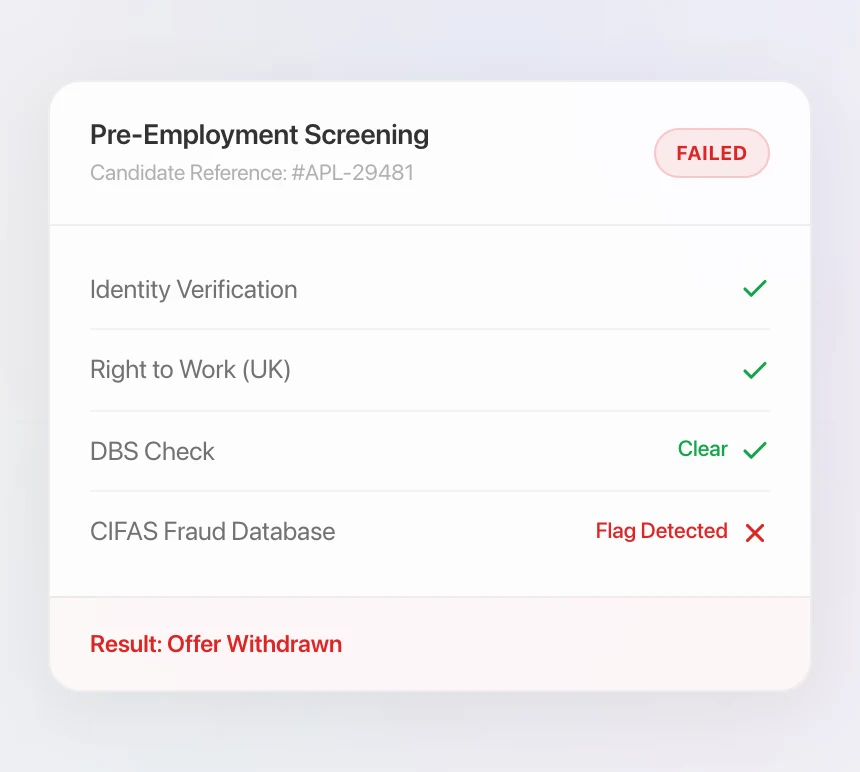
The consequences are brutal. You'll be declined for bank accounts, mortgages, car finance, credit cards, insurance, phone contracts, and even jobs. The rejection letters never mention CIFAS; they'll blame "internal criteria" or "failed our checks." Most people spend months trying to work out what's wrong before they discover the marker exists. If you've been declined for a mortgage specifically, see our guide to getting a mortgage with a CIFAS marker.
Can a CIFAS marker actually be removed?
Yes. At any point during the six-year period.
This is the single most important thing to understand. You do not have to wait for the marker to expire. It can be challenged and fully deleted (not suppressed, not annotated, completely removed) if the institution that filed it cannot justify it.
Under CIFAS Principle 4, the filing institution must be able to prove that you acted with deliberate dishonesty. Not suspicion. Not unusual activity. Not automated pattern matching. Deliberate, provable dishonesty, with evidence strong enough to meet the standard.
In practice, a huge number of markers fail this test. They're filed because:
- Automated fraud detection flagged something: a login from a new device, an unusual transaction, a change of address followed by a large purchase.
- The person was actually a victim (account takeover, identity theft, authorised push payment fraud) and the institution filed the marker against the victim instead of the perpetrator.
- A family member or partner used the account: technically third-party access, but a world away from deliberate fraud.
- The institution closed a disputed account: a complaint became a chargeback, and the institution filed a marker rather than resolve it.
If the evidence doesn't stack up, the marker must be removed. That's not an opinion; it's a legal requirement under data protection law.
The 5 most common CIFAS marker types
Not all markers are the same. The type determines both the challenge strategy and the likelihood of removal.
1. Misuse of Facility (Category 6)
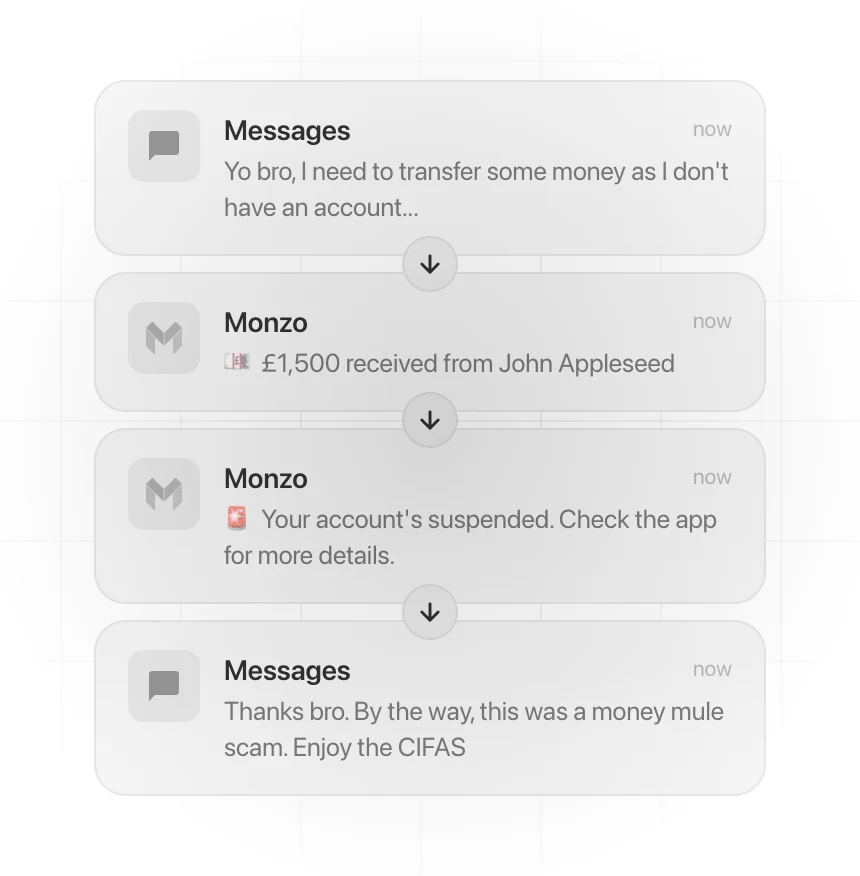
The most common marker by far. Filed when an institution believes you've misused an existing account or service: receiving fraudulent funds, making disputed transactions, or violating account terms. This is the marker that catches the most innocent people, because "misuse" is interpreted incredibly broadly, and it is the marker most commonly filed against people used as money mules. Highly challengeable: institutions frequently file these on suspicion alone without proving deliberate dishonesty.
2. First Party Fraud
Filed when an institution believes you personally committed fraud, not that someone used your identity, but that you deliberately deceived them. Examples include claiming items weren't delivered when they were, or disputing legitimate transactions. Challengeable if the institution can't prove intent; many are filed based on algorithms, not evidence.
3. Application Fraud
Filed when an institution believes you provided false information on an application: inflated income, fabricated employment, or used someone else's details. Challengeable if the "false" information was actually correct, or if the discrepancy was a genuine mistake rather than deliberate deception.
4. Facility Takeover
Filed when someone takes over another person's account: changing login credentials, redirecting payments, or draining funds. This marker should be filed against the perpetrator, but institutions frequently file it against the victim instead. If you're the victim, this marker is almost always removable.
5. Identity Fraud
Filed when someone uses your identity to open accounts or obtain services. Again, this should protect you, but the marker often ends up on your record rather than the fraudster's. Victims of identity fraud should have a Protective Registration (which helps, not hinders), not a fraud marker. Highly challengeable when filed against the victim.
How the removal process works
Removing a CIFAS marker isn't a single letter. It's a structured escalation process with up to eight distinct levels, each with its own rules, deadlines, and legal basis. Most people give up after step one, which is exactly what institutions count on.
Formal complaint to the institution. You write directly to the institution that filed the marker, setting out why the marker doesn't meet the CIFAS filing standard. This must be specific, legally grounded, and reference the evidence (or lack of it). They have 8 weeks to respond.
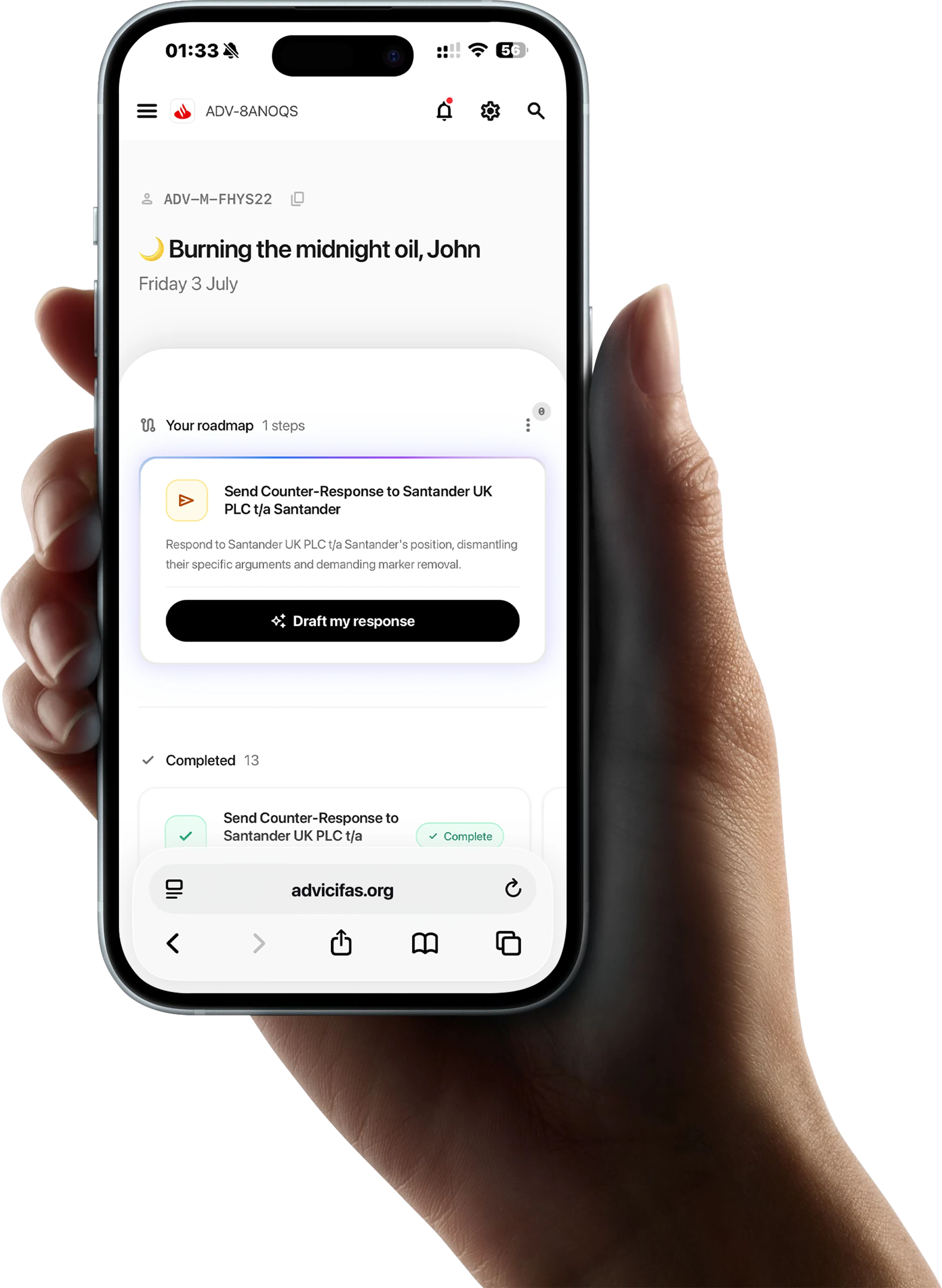
Counter-response. When they reject (and they almost always do on round one), you send a detailed rebuttal addressing every point in their response. This is where most template-based challenges collapse; the counter-response must be tailored to their specific reasoning.
GDPR / Subject Access Request challenge. You SAR the institution to get their internal fraud notes and evidence. Then you use it against them, challenging whether their data processing meets UK GDPR requirements.
Data Protection Act challenge. A parallel legal avenue; challenging whether the marker is lawful and proportionate under the DPA 2018. Creates additional regulatory pressure.
ICO referral. If the institution refuses to address data protection concerns, you refer the matter to the Information Commissioner's Office. The ICO can investigate and order removal if the processing is unlawful.
Financial Ombudsman complaint. You escalate to the Financial Ombudsman Service (FOS). The Ombudsman can order the institution to remove the marker and pay compensation. This is free to you and binding on the institution.
FOS final decision. If the initial Ombudsman investigator's view goes against you, you can request a final decision from an Ombudsman, a more senior review that's legally binding. Many cases that lose at investigation stage win at final decision.
Judicial review. Court proceedings. Rarely necessary, the vast majority resolve earlier, but available when institutions or regulators have acted unlawfully.
The key insight: each level creates compounding pressure. An institution that ignores a complaint won't ignore an Ombudsman investigation. The process is designed to escalate until the cost of maintaining an unjustified marker outweighs the effort of removing it.

ADVICIFAS Pro
Unfairly
Labeled a Fraud
Risk by CIFAS?
Remove It Like a Pro. Not templates. Not a solicitor. A system that builds your entire legal challenge from your report — £14.99/mo, accessible in minutes, cancel anytime.
The legislation that protects you
CIFAS markers aren't above the law. Several pieces of UK legislation give you concrete legal rights to challenge one.
UK GDPR
The UK General Data Protection Regulation is your primary weapon. Four articles matter most:
- Article 5: Data must be accurate, adequate, and not excessive. A marker filed on suspicion without evidence fails this test.
- Article 6: Processing must have a lawful basis. The institution must show that maintaining the marker is necessary and proportionate, not just convenient.
- Article 17: The right to erasure. You can request deletion of personal data that is no longer necessary or was processed unlawfully.
- Article 21: The right to object. You can object to the processing of your data, and the institution must stop unless they can demonstrate compelling legitimate grounds.
Data Protection Act 2018
The DPA 2018 supplements UK GDPR with domestic provisions. It gives you the right to challenge automated decision-making, relevant when markers are filed by algorithms, and provides the framework for ICO complaints and enforcement.
FCA Consumer Duty
Since July 2023, the FCA Consumer Duty requires financial firms to deliver good outcomes for customers. Filing a CIFAS marker against a fraud victim, or maintaining one without adequate evidence, arguably breaches this duty. It's a newer lever, but an increasingly powerful one in Ombudsman cases.
Common mistakes that ruin your case
Most CIFAS challenges fail not because the marker is justified, but because the person challenging it makes avoidable errors. Here are the ones we see repeatedly:
Using templates. Every institution has seen every template. They recognise them within the first paragraph and send a standard rejection. Templates don't address your circumstances, don't reference the institution's evidence, and don't cite the right legislation for your marker type.
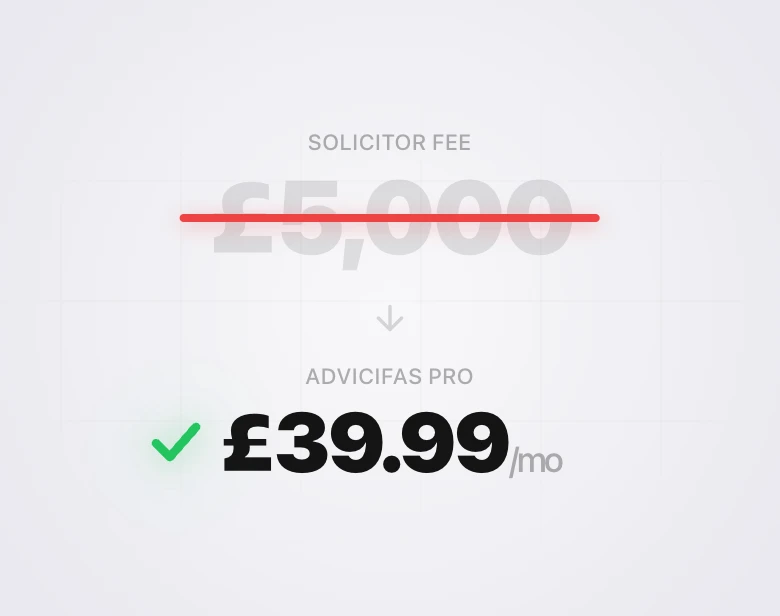
Hiring a solicitor. Most solicitors don't understand CIFAS. They send a threatening letter, the institution ignores it, and you've spent thousands to end up where you started. The few who do specialise charge £5,000+, and still follow the same escalation process you could manage yourself. Read more on why CIFAS markers are not legal issues.
Waiting for expiry. Six years. That's how long a CIFAS marker lasts. During every one of those years, you can't get a mortgage, decent insurance, car finance, or, increasingly, a job. The total financial cost of waiting can run into tens of thousands of pounds. Challenging immediately is always better than waiting.
Accepting the first rejection. Institutions auto-reject almost every initial complaint. It's standard procedure. The rejection letter will be firm, detailed, and sound final. It isn't. The first rejection is step one of an eight-step process, not the end of the road.
Being emotional in letters. Telling the institution how the marker has ruined your life is understandable. It's also irrelevant to the decision. The challenge must be clinical, specific, and legally grounded. How you feel about the marker doesn't affect whether it meets the filing standard. Save the impact statement for the Ombudsman; that's where it actually matters.
How ADVICIFAS Pro works
ADVICIFAS Pro isn't a template pack. It isn't an AI chatbot that generates generic advice. It's a purpose-built system designed around the specific mechanics of CIFAS marker removal, built on hundreds of real cases.
Here's what happens when you sign up:
Your CIFAS report is analysed. The system reads your CIFAS report and identifies exactly what type of marker was filed, which institution filed it, and when. This determines the entire challenge strategy.
Your institution is profiled. Every institution handles CIFAS challenges differently. The system knows how each one responds, what arguments they use, and which escalation paths work best against them.
Unique letters are built. Every letter is generated specifically for your case; citing the legislation that applies to your marker type, referencing the institution's specific obligations, and addressing the evidence (or lack of it). No templates. No copy-paste.
Escalation is managed. The system tracks where you are in the process, monitors deadlines, and generates the right letter for each stage, from initial complaint through to Financial Ombudsman referral. You always know exactly what to do next.
Responses are tracked. When the institution replies, you log their response and the system analyses it, identifying weaknesses in their argument and building the next letter to exploit them.
ADVICIFAS Pro costs £14.99/month and you can cancel anytime. The system manages the entire challenge process, from reading your CIFAS report through to Financial Ombudsman referral. No templates. No guesswork. Built on hundreds of real marker removals. Start your challenge.
The marker is the problem. Remove it.
Every day the marker stays is another day of declined applications, higher premiums, and missed opportunities. If you need banking access while your challenge is in progress, see our guide to bank accounts that accept CIFAS markers. Workarounds treat symptoms. Removal is the cure, and the outcome is binary: either they can prove deliberate dishonesty, or the marker must be removed.
Start your CIFAS marker challenge with ADVICIFAS Pro.
For institution-specific strategies, see our CIFAS marker removal guides covering every major UK institution.